

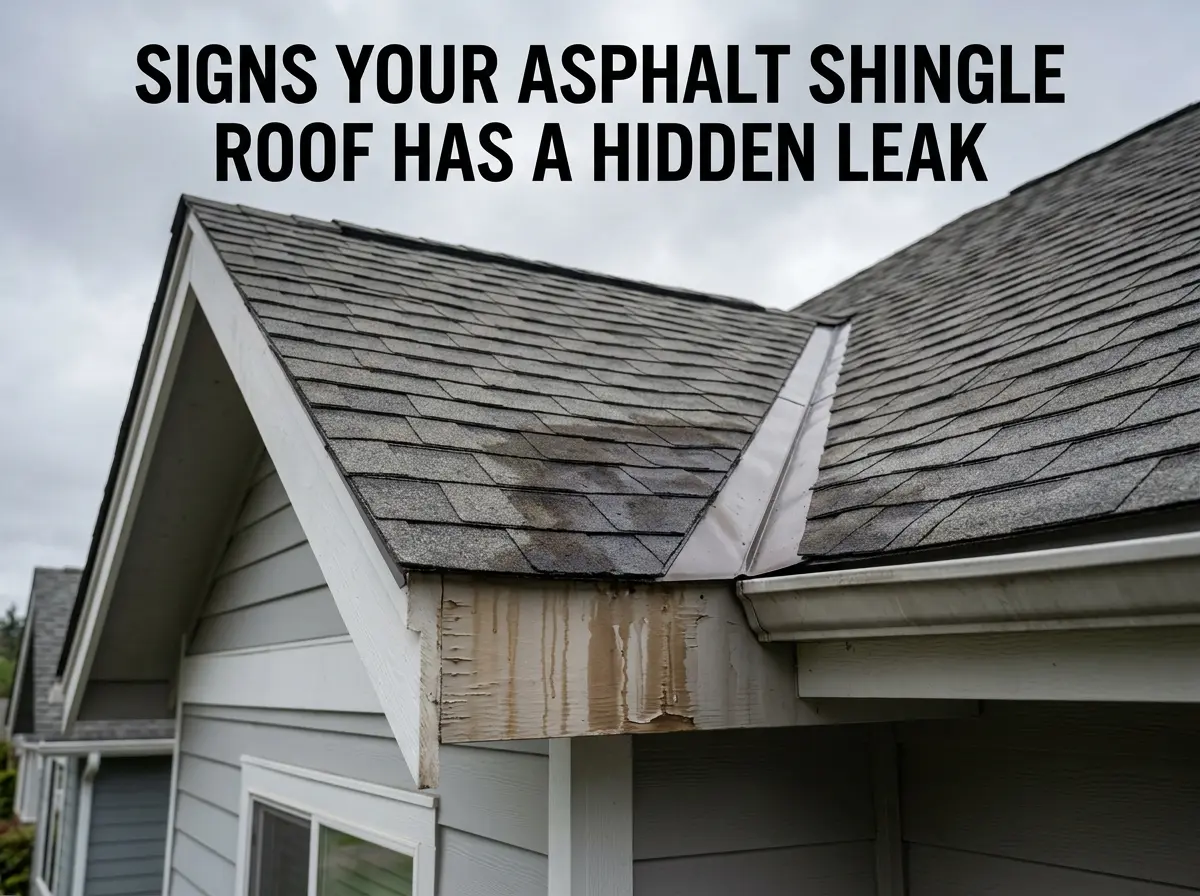
Water is sneaky. It finds the smallest crack. It seeps in where you can’t see it. Days or weeks pass. Then you spot a stain on your ceiling. By then, the damage is already done. Hidden roof leaks are dangerous. They rot wood. They grow mold. They cost you money. Knowing the early signs helps you catch them fast. Here’s what to look for.
What Is a Hidden Roof Leak?
A hidden roof leak is exactly what it sounds like. Water gets into your home. But you don’t see it right away. It travels along rafters. It soaks into insulation. It drips down walls inside the structure.
The water doesn’t always come straight down. It can move sideways. It can pool in low spots. It can sit there for weeks before you notice anything.
By the time you see a water stain, the damage has spread. That’s why catching hidden leaks early is so important.
What Are the Early Warning Signs of a Hidden Leak?
You don’t need to wait for water to drip from your ceiling. Here are the early signs that something is wrong.
Musty Smells in Your Home
Mold and mildew have a distinct smell. It’s damp and earthy. If your house smells musty, moisture is present. That moisture is coming from somewhere.
Check your attic first. Smell the insulation. Does it have that same damp odor? If yes, you have a leak.
Peeling Paint or Bubbling Wallpaper
Water pushes paint away from walls. It makes wallpaper bubble up. This often happens near ceilings or along top edges of walls.
People think this is just old paint. But it’s often moisture behind the surface. Don’t ignore it.
Stains on Ceilings or Walls
Brown or yellow spots are classic leak signs. They start small. They grow over time. The edges are often darker than the center.
Water stains are not just ugly. They mean your roof is failing somewhere. Find that source before it gets worse.
Warped or Buckled Floors
Water travels down. It soaks into floorboards. Wood swells when it’s wet. This causes warping and buckling.
Check the floors under your attic. Press on them. Do they feel soft or spongy? That’s a bad sign.
Higher Energy Bills
Wet insulation doesn’t work well. It loses its R-value. Your HVAC has to work harder. You see it on your energy bill.
If your energy bill goes up for no reason, check your attic. Wet insulation is often the culprit.
Mold in Your Attic
Attics are dark and warm. That’s perfect for mold. Look for black, green, or white patches on wood surfaces.
Mold spreads quickly. It can affect your indoor air quality. People with allergies notice it first.
How Does Water Move Inside Your Roof?
Water doesn’t just fall straight down. It follows paths. It moves along roof decking. It runs down rafters. It drips into insulation.
Sometimes water enters at one spot. It travels 10 feet or more before it shows up. You might see a stain in your living room. But the actual leak is over your kitchen.
This makes hidden leaks tricky to find. Roofers often need to check the entire roof to locate the source.
Why Are Asphalt Shingle Roofs Prone to Hidden Leaks?
Asphalt shingles are durable. But they have weak spots. Here’s where leaks often start.
Damaged or Missing Shingles
Storms rip shingles off. Hail cracks them. Wind lifts edges. Water gets under these damaged spots and finds a way in.
Flashing Problems
Flashing is metal that seals roof transitions. It goes around chimneys, vents, and skylights. Flashing rusts or comes loose. Then water gets behind it.
Worn Out Sealant
Asphalt shingles seal to each other. Heat activates the sealant. Over time, that sealant fails. Wind lifts shingles. Water gets underneath.
Clogged Gutters
Gutters back up when they’re full. Water sits against the roof edge. It seeps under shingles. It rots the fascia boards.
Cracked Boots
Plumbing vent boots crack from sun and heat. A cracked boot lets water run right down the pipe. This is a very common hidden leak.
How to Check for Hidden Roof Leaks Yourself
You can do a basic inspection. Here’s how.
Check Your Attic
Use a flashlight. Look for stains on roof sheathing. Touch the insulation. Is it wet or damp? Check for dark streaks. Those are water trails.
Look at Your Ceilings
Check every room. Look for discoloration. Feel for dampness. Bubbling paint is a dead giveaway.
Inspect Your Gutters
See any granules? That’s shingle wear. Lots of granules mean your shingles are aging. Check for clogs too.
Test Your Downspouts
Run water through a hose. Make sure water flows away from your home. If it pools near your foundation, you have issues.
Check Exterior Walls
Look for water stains on your siding. Water that’s near the roof line often means a leak above.
When Should You Call a Professional?
Some leaks are easy to spot. Others need a pro. Call a Down to Earth Roofing LLC if you see these signs.
Persistent Ceiling Stains
If you keep painting over a stain and it keeps coming back, you have a leak. The stain won’t go away until the leak is fixed.
Sagging or Spongy Spots
Press on your ceiling. If it feels soft or sagging, water has damaged the drywall. That’s serious.
Visible Mold or Mildew
Mold is a health hazard. Don’t try to clean it yourself if it’s spreading. You need a pro to find the source and fix it.
Water Dripping Inside
This is an emergency. Call a Down to Earth Roofing LLC right away. Water damage gets worse by the hour.
Storm Damage
If a storm hit Columbia recently, get your roof checked. Even if you don’t see damage, it could be there. Down to Earth Roofing LLC offer free inspections.
Can You Ignore a Small Roof Leak?
Never ignore a leak. Even a small one causes big problems. Water rots wood. It rusts nails. It grows mold. It ruins insulation.
A small leak today becomes a major repair next year. The cost difference is huge. Fix it while it’s still small.
How Much Does Roof Leak Repair Cost in Columbia?
Repair costs vary. It depends on the leak’s location and severity.
- Minor repair near the edge: $150–$400
- Moderate repair around flashing: $400–$900
- Major repair with structural damage: $900–$2,500
- Roof replacement (if needed): $7,000–$15,000
Compare that to a small repair. It’s always cheaper to fix leaks early. Don’t wait.
How to Prevent Hidden Roof Leaks
Prevention is better than repair. Here’s what you can do.
Schedule Annual Inspections
Have a roofer check your roof once a year. They’ll spot problems you might miss. Many Columbia roofers offer free inspections.
Clean Your Gutters
Clean gutters twice a year. Remove leaves and debris. Make sure downspouts drain away from your house.
Trim Overhanging Branches
Branches scrape shingles. They drop leaves that clog gutters. They fall on roofs during storms. Keep them trimmed.
Check Your Attic Ventilation
Good airflow keeps your roof cool. It prevents moisture buildup. It extends shingle life.
Fix Small Issues Immediately
Don’t wait to fix a damaged shingle. Don’t ignore a cracked boot. Small fixes are cheap. Big repairs are not.
Frequently Asked Questions
How can I tell if my roof is leaking if I don’t see water?
Look for other signs. Musty smells in your home. Peeling paint on your walls. Bubbling wallpaper. Brown spots on your ceiling. Higher than usual energy bills. Mold in your attic. These all point to hidden moisture.
What should I do if I find a hidden leak?
Call a Down to Earth Roofing LLC professional right away. Water damage gets worse every hour. Get a free estimate. Determine if you need asphalt shingle roof leak repair or something more extensive.
How much does it cost to repair a roof leak in Columbia?
Small repairs cost around $150–$400. More serious leaks near chimneys or skylights cost $400–$900. If the deck is rotted, you’re looking at $1,000 or more. The average roof repair in Columbia is around $1,277.
How long does it take to repair a roof leak?
Minor leaks take 1 to 3 days. Major repairs take 4 to 7 days. It depends on weather and the roofer’s schedule. Emergency roofers can do temporary patches the same day.
Does homeowners insurance cover roof leak repair?
It depends. Most policies cover sudden leaks from storms or hail. But they don’t cover wear and tear. Check your policy. Down to Earth Roofing LLCF help with insurance claims.
How often should I have my roof inspected in Columbia?
At least once a year. Also inspect after major storms. Most roofers in Columbia offer free inspections. It takes about 20 minutes. That short visit can save you thousands.