


Got a few damaged shingles staring back at you from the roof? Yeah, you’re not alone. Happens to almost every homeowner eventually. Storms, age, or just normal wear and tear. The good news is many fixes are straightforward if you take your time and do it right.
I’ve patched my own roof more than once. First time I made mistakes that cost me extra work. Now I know better.
The good news? Many shingle repairs are DIY-friendly if you know what you’re doing. This guide walks you through everything from spotting damage to fixing it yourself.
Why You Should Repair Roof Shingles Immediately
Let’s cut to the chase: damaged shingles are trouble waiting to happen.
The Importance of Timely Shingle Repair
A single cracked or missing shingle might not seem urgent, but water doesn’t wait. Once moisture gets under your shingles, it attacks your roof deck, insulation, and eventually your ceilings.
Here’s what happens when you delay:
- Water seeps into tiny cracks and gaps
- Your roof deck starts rotting
- Insulation gets soaked and loses effectiveness
- Mold grows in hidden spaces
- Energy bills spike as your home loses efficiency
Fix problems within days, not weeks. A $50 roof repair today beats a $2,000 disaster later.
Common Causes of Roof Shingle Damage
Understanding why roof shingles fail is key to spotting issues before they worsen. Storms and harsh weather can seriously impact your roof’s integrity, as explained in this guide on how storms damage your roof. Regular checks and timely repairs help keep your home safe and protected.
Common Reasons Shingles Get Damaged
Wind is the biggest culprit around here. Strong gusts lift edges, tear tabs, and bend shingles. Hail leaves dents and cracks. Age and sun make them brittle. Even normal thermal expansion from our hot Columbia summers and cooler nights slowly loosens things over time.
If you live in the Midlands, you already know our weather throws everything at your roof. Understanding the cause helps you spot trouble early.
How to Spot Shingle Damage Early
Don’t wait for water inside the house. Walk around your property every couple of months. Use binoculars to scan the roof. Pay extra attention after any storm.
Look for:
- Shingles lying in the yard or stuck in gutters
- Dark spots or missing granules
- Lifted or curled edges
- Cracks or tears
Then go into the attic with a flashlight. Shine it around. Any daylight coming through the boards? Water stains on rafters? Damp insulation? Those are clear warning signs that water is already getting in.
Spring and fall are the best times for these checks. Spring shows what winter did. Fall gets you ready for the next round of weather.
Tools and Materials You Actually Need
Gather everything before you climb the ladder. Nothing worse than being halfway done and realizing you’re missing something.
Basic tools:
- Flat pry bar (the 12-inch one works great)
- Hammer or roofing nail gun
- Sharp utility knife
- Tape measure and chalk line
- Caulking gun and putty knife
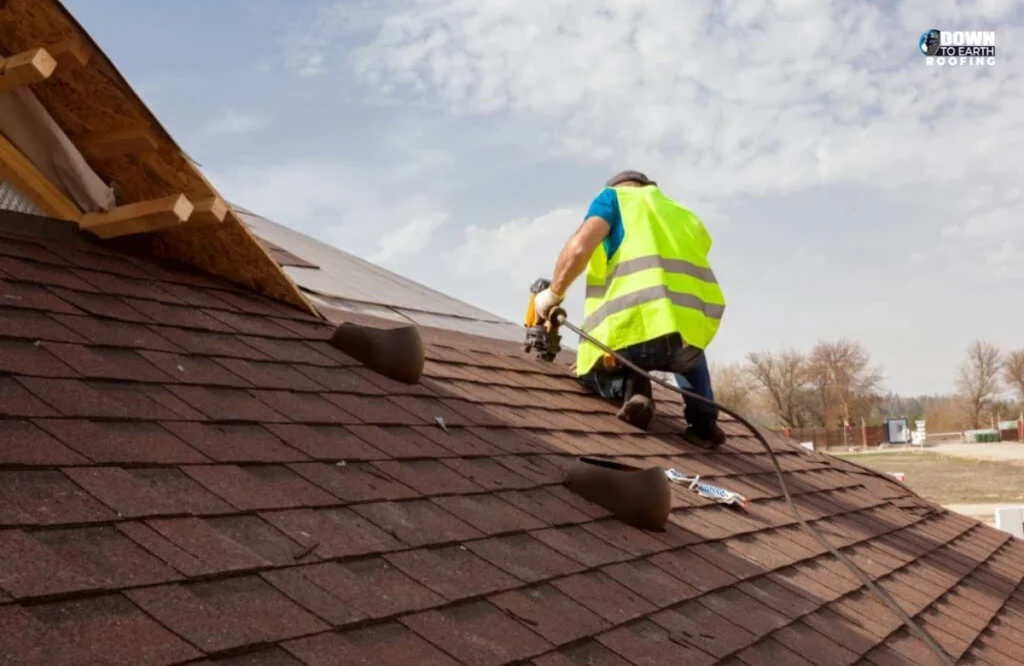
Safety gear is not optional:
- Good non-slip boots
- Work gloves
- Safety glasses
- Harness if the roof is steep
.
Materials You’ll Need for Roof Shingle Replacement
Shopping list:
- Replacement shingles (match your existing ones exactly)
- Roofing cement (trowel-grade and tube)
- Galvanized roofing nails (1¼ inches)
- Roofing underlayment (if deck is exposed)
- Tarps (for emergency coverage)
Pro tip on shingles: Bring a sample to the store. Colors and textures vary wildly between brands. What looks close online might look terrible on your roof.
Get cold-weather formula cement if you’re working below 50°F. Regular cement won’t stick properly in cold conditions.
Step-by-Step Guide to Repairing Roof Shingles
Ready to get your hands dirty? Let’s walk through the process.
How to Replace Shingles: A Simple Process
Replacing shingles isn’t rocket science, but technique matters.
The basic process:
- Lift the shingle above – Use your pry bar to gently lift the tabs covering the damaged shingle
- Remove the nails – You’ll find 4 nails in the damaged shingle plus 4 more from the shingle above
- Slide out the old shingle – Pull it down and out from under the upper course
- Slide in the new shingle – Work it up into position until it aligns with neighbors
- Nail it down – Use 4-6 nails in the right spots
- Seal it up – Apply cement under the shingle above and press down
Temperature matters: Shingles are easiest to work with between 50-85°F. Too cold and they crack. Too hot and they’re gooey.
How to Repair Shingles on Your Roof
Sometimes you don’t need full replacement. Small cracks and damage can be patched.
For minor damage:
- Clean the area thoroughly
- Apply roofing cement under the crack
- Press the shingle down firmly (hold for 30 seconds)
- Add another layer of cement on top
- Smooth it out with your putty knife
For lifted or curled shingles:
- Apply cement liberally underneath
- Press down hard
- Add a nail if needed
- Cover nail heads with cement
This works great for individual problems. But if you’re patching multiple spots all over your roof, replacement might make more sense.
Fixing Asphalt Shingles: Detailed Instruction
Let’s get into the nitty-gritty of a proper shingle replacement.
Step 1: Prep your replacement shingle
- Check it matches your existing shingles
- Trim if needed using a utility knife and straight edge
- Have all tools within reach
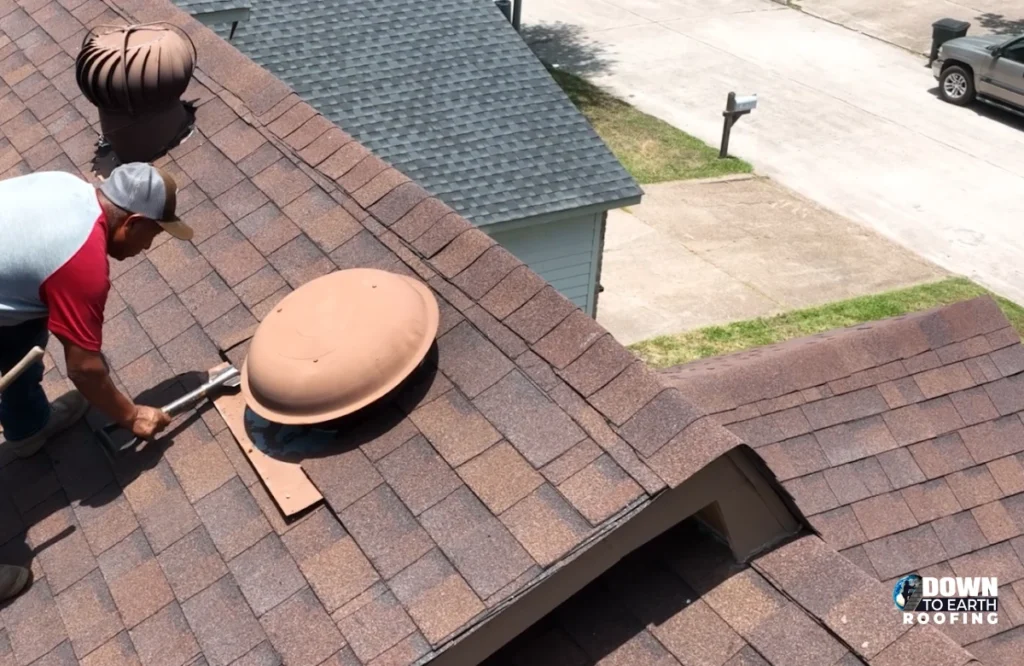
Step 2: Remove the damaged shingle
- Lift the shingle above with your pry bar
- Work slowly to avoid breaking good shingles
- Remove all 8 nails (4 from the damaged shingle, 4 from above)
- Slide the old shingle out gently
Step 3: Install the new shingle
- Slide it into position from below
- Work it up under the course above
- Check alignment with surrounding shingles
- Make sure it sits flat
- and even
Step 4: Secure it properly
- Drive 4 nails (6 in high-wind areas)
- Place nails about 5/8 inch from edges
- Position just below the adhesive strip
- Drive straight and flush (not too deep, not too shallow)
Step 5: Seal everything
- Lift the tab of the shingle above
- Apply roofing cement on its underside
- Press down over your new shingle
- Hold pressure for 30 seconds
Done! Your repair should last as long as the surrounding shingles.
How Much Does Shingle Repair Actually Cost?
Doing it yourself saves a lot. One or two shingles might cost you $20-50 in materials. A small section of 5-10 shingles runs $100-200 DIY versus $400-800 if you hire someone.
Bigger repairs get expensive fast. Wind damage across a whole side can hit $1,000-3,000 professionally. Full roof replacement? That’s $8,000 to $20,000+ depending on your home size.
The labor is where pros charge the most. You’re paying for their experience, insurance, and equipment. If your roof is low and easy to access, DIY makes sense. Steep, tall, or lots of damage? Call a professional.
When You Should Call a Pro Instead
Some jobs are better left to experts. If the roof is steep, two stories or higher, or if you see signs of deck damage, don’t risk it. More than 20% of the roof affected, structural sagging, or complicated flashing work around chimneys — these are pro territory.
Safety first. If you’re not 100% comfortable with heights or don’t have proper gear, hire someone. It’s cheaper than a hospital bill.
Factors Affecting Roof Shingle Replacement Cost
When to Call a Professional for Roof Shingle Repair
DIY roof shingle repair is fine for small fixes like replacing a few shingles on a low-pitch, easy-to-access roof if you have the tools, skills, and safe weather. It’s best for single shingle replacements or minor sections under 10 shingles. But once the roof is steep, multi-story, or the damage is extensive, a pro is the safer bet. Call an expert if more than 20% of the roof is affected, the deck is unstable, or structural issues appear. Complex jobs like valley repairs, flashing, or ventilation damage shouldn’t be DIY. Also, consider safety gear, insurance coverage, and your comfort with heights before deciding. If any of these raise doubt, professional help is worth the cost.
Professional Asphalt Shingle Repair: When is it Necessary?
Repairs fix today’s problems, but maintenance prevents tomorrow’s. Keep your roof in top condition by cleaning gutters quarterly, inspecting after storms, and scheduling professional checks every 3-5 years. Trim branches at least 6 feet from your roof, remove moss and algae promptly, and ensure proper attic ventilation to prevent heat damage and ice dams. Fix small problems immediately before they escalate a $200 inspection might save you $5,000 in prevented damage. Regular maintenance extends your roof’s life by years and catches early signs of wear before leaks start, making it cheap insurance for your biggest investment.
Ready to Fix Those Shingles?
Repairing roof shingles doesn’t have to be intimidating. Armed with the right knowledge, tools, and safety precautions, many homeowners successfully handle their own repairs.
Remember the key points:
- Act quickly when you spot damage
- Use proper safety equipment always
- Match materials carefully for best results
- Know when to call a professional
- Maintain your roof to prevent future problems
Whether you’re replacing shingles after wind damage, fixing asphalt roof shingles, or tackling a complete shingle roof repair, taking action now protects your home and saves money long-term.
Got questions? Start with a thorough inspection, gather your materials, and take it one shingle at a time. Your roof and your wallet will thank you.
Final Thoughts
Repairing roof shingles isn’t complicated once you know the right steps. Act fast when you spot damage. Use the proper tools and safety gear. Match materials carefully. And know when it’s smarter to call a pro.
Your roof protects everything you own. Taking care of it now keeps your home dry and your wallet happy later.
If the damage looks bigger than a few shingles or you’re not sure about climbing up there, Down to Earth Roofing LLC handles roof repair for Columbia and Lexington homeowners the right way. They’ve seen it all and know exactly what works in our local weather.
Frequently Asked Questions About Roof Shingle Repair
How much does it cost to replace a few shingles?
DIY costs $5-15 per shingle ($50-150 for 5-10 shingles), while professional replacement runs $150-300 per shingle or $300-800 for small sections.
Can I repair roof shingles myself?
Yes, if you’re comfortable with heights and have basic DIY skills, though steep roofs, extensive damage, or structural issues require a professional.
How long do asphalt shingles last after repair?
Properly repaired shingles last as long as surrounding shingles typically 10-20 years depending on your roof’s age and the quality of repair work.
What’s the best temperature to replace roof shingles?
Work between 50-85°F for best results shingles become too brittle in cold weather and too soft in extreme heat.
How do I know if my roof needs repair or full replacement?
Repair if damage affects less than 20% of your roof; replace if you have widespread damage, your roof is over 20 years old, or multiple leak areas exist.
Will insurance cover wind damage to my roof shingles?
Most policies cover sudden storm damage, but you must document it immediately with photos and file claims promptly age-related wear isn’t covered.