

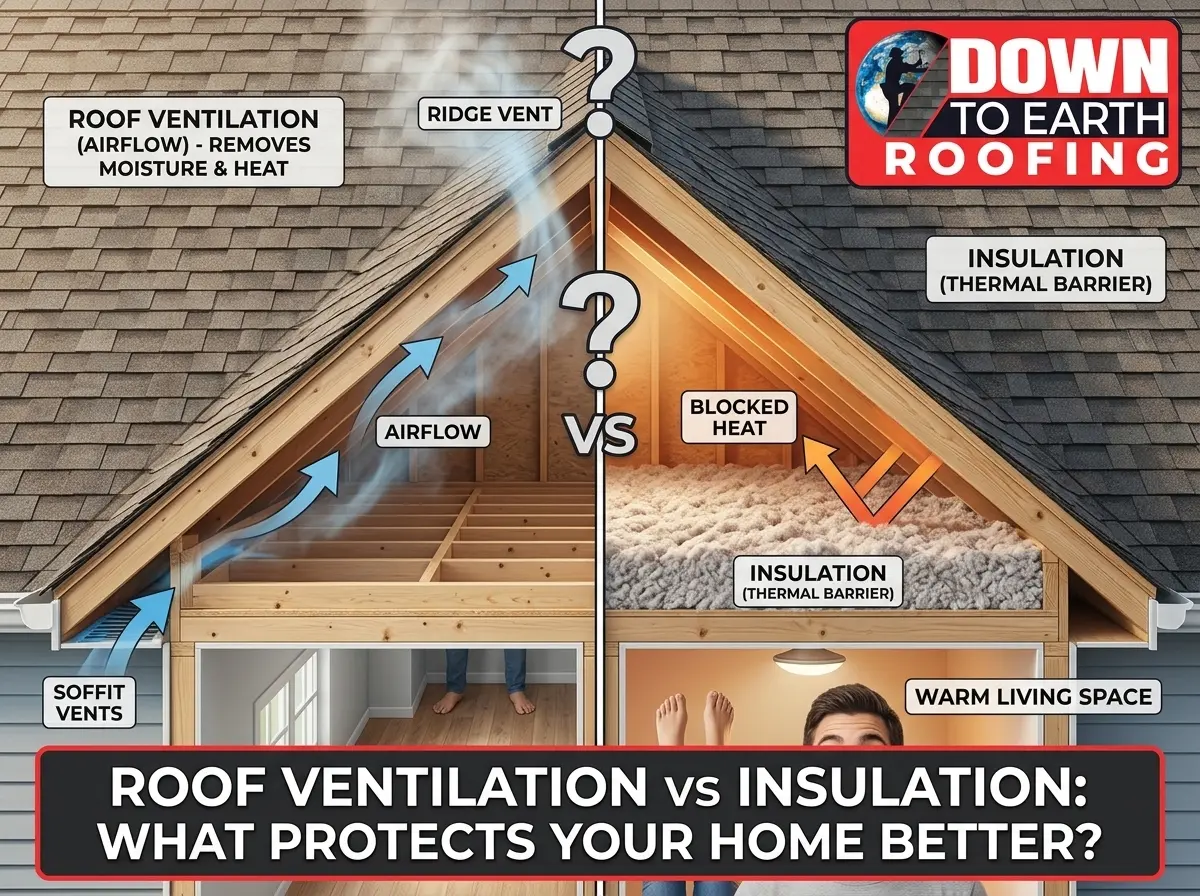
Your roof does more than keep rain out. It also controls temperature and moisture. Two systems help with this. They are ventilation and insulation. Some people think they do the same job. They are wrong. This guide explains roof ventilation vs insulation. You will learn how they work together. You will also see which one matters more for your home.
What Is Attic Insulation?
Insulation is a barrier. It slows down heat transfer. In winter, it keeps heat inside your home. In summer, it stops heat from coming in. Insulation comes in many forms. Fiberglass batts are common. Blown-in cellulose is another option. Spray foam is also popular.
The insulation’s job is to create a thermal barrier. It keeps your living space comfortable. It also reduces your energy bills. Without enough insulation, heat escapes in winter. In summer, heat pours in. Your HVAC system has to work harder.
What Is Roof Ventilation?
Ventilation is about airflow. It lets air move through your attic. This removes heat and moisture. Proper ventilation uses intake vents and exhaust vents. Intake vents are usually in the soffits. Exhaust vents are on the roof ridge. Air flows in from the bottom. It flows out at the top. This is called passive ventilation.
Ventilation’s job is to keep the attic dry and cool. It stops moisture buildup. This prevents mold and rot. It also stops ice dams in winter. In summer, it lets hot air escape. This makes your home more comfortable.
How Do They Work Together?
Ventilation and insulation are a team. They need each other. Think of it like a winter jacket. The insulation is the warm lining. The ventilation is the zipper. You need both for the jacket to work.
Insulation stops heat from moving. Ventilation removes the heat that does get in. If you have good insulation but poor ventilation, moisture builds up. This damages your roof. If you have good ventilation but poor insulation, you waste energy. Your home feels drafty.
Roof Ventilation vs Insulation: A Side-by-Side Comparison
Let’s compare the two systems directly.
| Feature | Ventilation | Insulation |
| Primary Job | Controls airflow and moisture | Controls heat transfer |
| Winter Benefit | Prevents ice dams and moisture | Keeps heat inside |
| Summer Benefit | Removes hot air from attic | Stops heat from entering living space |
| Key Components | Soffit vents, ridge vents, baffles | Batts, blown-in, spray foam |
| Effect on Energy Bills | Reduces HVAC load indirectly | Directly reduces heating/cooling costs |
| Protection Against | Mold, rot, structural damage | Temperature swings, high bills |
What Happens When You Lack One?
Each system is important. Problems start when one is missing.
Too Much Insulation, Not Enough Ventilation
This is a common problem. The attic is well-insulated. But there is no airflow. Moisture gets trapped. In winter, this causes condensation. Ice dams form on the roof. The roof deck begins to rot. Mold grows in the attic. This can ruin your roof and your health. It can also void your roof warranty.
Too Much Ventilation, Not Enough Insulation
The attic has good airflow. But there is no thermal barrier. In summer, the attic gets hot. The air flows freely. But it cannot stop the heat from entering your living space. Your AC runs constantly. Your energy bills are high. In winter, heat escapes through the attic. Your furnace never stops.
How Do You Know If You Have a Problem?
Look for these warning signs. They tell you something is wrong.
- Ice dams in winter: Snow melts and refreezes at the roof edge.
- Mold or mildew in the attic: Dark spots on wood or insulation.
- Rust or frost on nails: Moisture is condensing in the attic.
- High energy bills: Your heating or cooling costs are too high.
- Uneven temperatures: Some rooms are hot in summer or cold in winter.
- Curling or buckling shingles: Heat is trapped in the attic.
If you see any of these, call a professional. They can inspect your system. They will find the problem and fix it.
How Does Down to Earth Roofing LLC Help?
Down to Earth Roofing LLC is a trusted roofing contractor in Columbia, SC. They understand the local climate. They know how important both ventilation and insulation are.
Expert Inspection
They inspect your whole roof system. They check the insulation levels. They also check the ventilation. They look for blocked soffit vents. They check the ridge vents. They find any problems.
Balanced Solutions
They do not just recommend one system. They recommend a balanced approach. They will suggest adding insulation if needed. They will also improve ventilation. They ensure the two systems work together.
Professional Installation
They install both insulation and ventilation. They use high-quality materials. They follow best practices. They ensure your roof is properly protected. Their work is built to last.
Local Knowledge
They know Columbia’s climate. They know the challenges. They recommend solutions that work in your area. This gives you peace of mind.
What Are the Best Ventilation and Insulation Solutions?
Every home is different. But there are some best practices.
For Ventilation
- Balanced system: You need both intake and exhaust vents.
- Proper placement: Intake vents go in the soffits. Exhaust vents go at the ridge.
- Adequate airflow: You need one square foot of net free area for every 300 square feet of attic floor.
- Clear of insulation: Do not block the soffit vents with insulation.
For Insulation
- Sufficient R-value: Columbia needs R-49 in the attic. That is about 16 inches of fiberglass or 12 inches of blown-in cellulose.
- Air sealing: Seal any air leaks before adding insulation. This stops warm air from escaping.
- Professional installation: Proper installation is key to performance.
Which One Matters More?
Both matter equally. You cannot choose one over the other. They are a complete system.
A roof with great insulation but poor ventilation will fail. The moisture will rot the deck. A roof with great ventilation but poor insulation will waste energy. Your bills will be high.
The best approach is a balanced one. Invest in both systems. This protects your home in summer and winter. It also saves you money.
Protect Your Home with Down to Earth Roofing LLC
Your roof is a big investment. It needs proper care. Ventilation and insulation are key to its health. They control temperature and moisture. They prevent damage and save energy.
Down to Earth Roofing LLC is here to help. They are experts in both systems. They will inspect your roof. They will recommend the right solutions. They will install everything professionally. They will make sure your roof is properly protected.
Ready to balance your roof system? Contact Down to Earth Roofing LLC today. Call them or visit their website at Down to Earth Roofing LLC. Schedule your inspection and protect your home.
Frequently Asked Questions
Do I need both roof ventilation and insulation?
Yes, both are essential. They do different jobs. Insulation stops heat transfer. Ventilation controls airflow and moisture. They work together to protect your roof and your home.
Is roof ventilation more important than insulation?
No, both are equally important. A home with good insulation but poor ventilation will have moisture problems. A home with good ventilation but poor insulation will have high energy bills. You need a balanced system.
Can too much insulation cause problems?
Yes, too much insulation can block air flow. This can trap moisture in the attic. It can also cause ice dams. Always make sure ventilation is not blocked by insulation.
How often should I check my roof ventilation and insulation?
Check your attic at least once a year. Look for signs of moisture or damage. After major storms or temperature changes, check more often. A professional inspection every few years is also a good idea.