

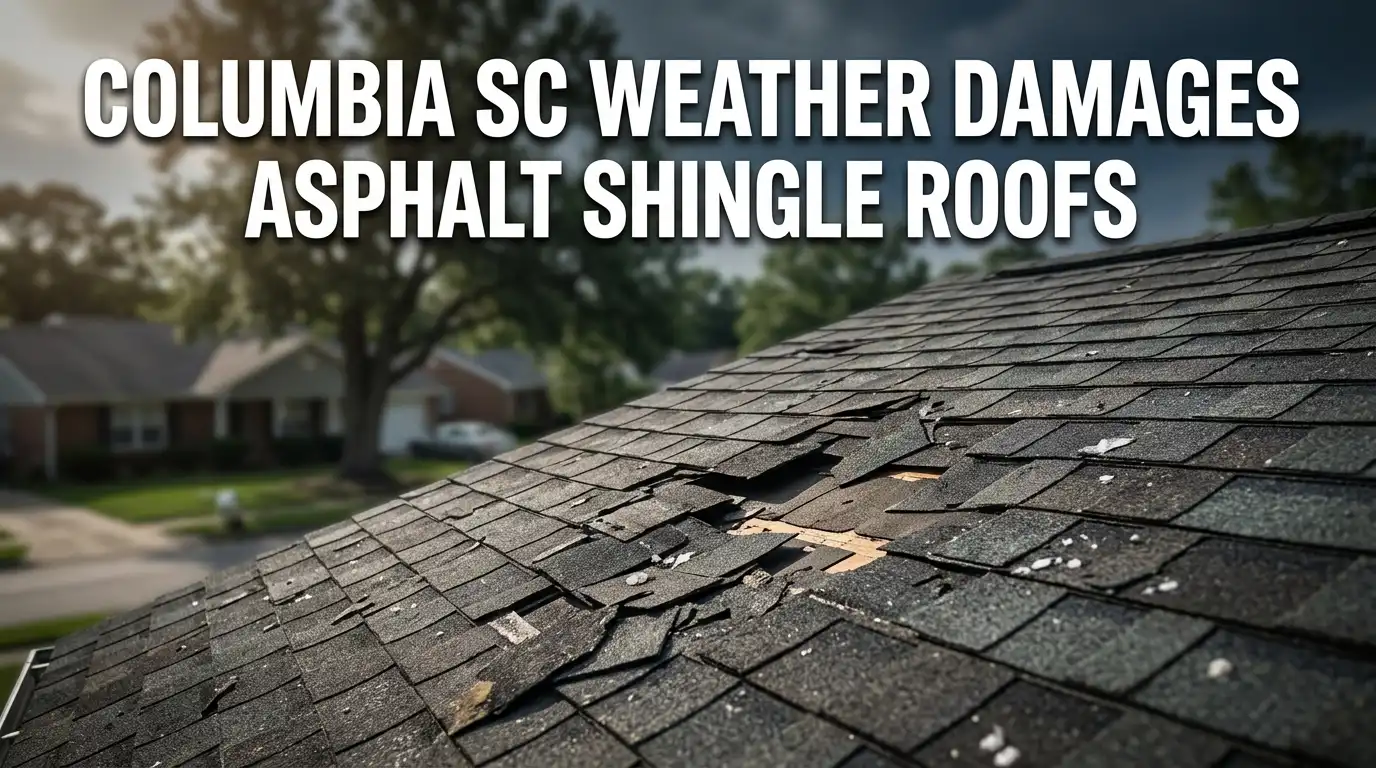
Columbia weather isn’t kind to roofs. The heat hits hard. The humidity hangs thick. Storms roll in with wind and hail. All of this wears down asphalt shingles over time. Knowing what to look for helps you catch problems early. And early action saves you money.
Why Is Columbia Weather So Tough on Shingles?
Columbia sits right in the middle of a humid subtropical zone. That means hot summers. Lots of rain. And storms that can pop up out of nowhere.
You get strong winds here. You get blazing sun. You get sudden temperature drops too. These things add up. They beat on your roof day after day.
Asphalt shingles are everywhere in South Carolina. They’re cheap. They work well. But Columbia’s weather shortens their life. A roof that should last 25 years might only make it 15 or 18 here.
What Does the Sun Do to Your Shingles?
Summer in Columbia is no joke. The sun blazes down. UV rays break down the asphalt. Shingles get brittle. Then they crack.
Look at your gutters. See those little dark specks? That’s granule loss. Shingles have a layer of tiny stones on top. They protect the asphalt underneath. When those granules wash away, the sun hits the asphalt directly.
Some granule loss is normal. Every roof does it. But when you see a lot, your roof is aging faster than it should.
Heat comes from below too. Bad attic ventilation traps hot air. That cooks your shingles from underneath. Good airflow helps them last longer.
How Does Hail Hurt Asphalt Shingles?
Hail hits Columbia every year. Sometimes it’s small. Sometimes it’s big enough to dent cars.
Hail does two kinds of damage. One is just cosmetic. That’s minor granule loss. It looks bad but doesn’t leak. The other kind is structural. That’s when the shingle cracks or the asphalt gets exposed.
You need to know what to look for after a storm. Bruises are soft spots. Press on the shingle. If it feels like a bruised apple, that’s damage. Fractures are cracks. They start underneath and work their way up.
Hail size matters a lot. Stones smaller than an inch and a half usually don’t cause major issues. But hail between 1.75 and 2 inches? That’s when things get serious.
Which Roof Slopes Take the Biggest Hit?
Some roof angles get damaged more than others. Low slopes under 4:12 are vulnerable. Steep roofs over 9:12 also take a beating. The sweet spot is in the middle. Moderate slopes around 5:12 to 9:12 hold up best.
The angle of the hail matters too. When hail hits straight down at 90 degrees, it does more damage. Wind-driven hail comes in at weird angles. That can actually protect some parts of your roof.
Which Side of the Roof Gets It Worst?
Ever notice one side of your roof looks worse after a storm? That’s not your imagination. The side facing the storm takes almost two and a half times more damage.
So if a storm comes from the southwest, that side of your house gets hammered. The north and east sides? They usually look a lot better.
What Do Strong Winds Do to Shingles?
Columbia gets some real windstorms. Gusts can hit 60 miles an hour or more. That’s enough to lift shingles right off your roof.
When shingles go missing, water gets in. Then you’ve got leaks. Then you’ve got rot. It’s a chain reaction.
Winds also lift edges. Once the edge is up, water slides underneath. That’s when trouble starts. You might not even see it from the ground.
Tree branches are another problem. A big limb comes down. It punctures a shingle or two. Then you’ve got a hole. And holes mean leaks.
Why Is Rain Such a Problem in Columbia?
Columbia gets plenty of rain. Some years it’s over 45 inches. That’s a lot of water hitting your roof.
If your shingles are damaged, that water finds a way in. A tiny crack turns into a ceiling stain. That stain turns into rot. Then mold. Then expensive repairs.
Here’s what water damage looks like inside your house:
- Yellow or brown spots on the ceiling
- Peeling paint near the top of walls
- Musty smells in the attic
- Warped wood anywhere
Rain also sits in shady spots on your roof. That grows algae and moss. Those ugly black streaks aren’t just gross. They eat away at shingles over time.
When Do You Need to Call a Roofer in Columbia?
Don’t wait until water’s dripping on your couch. Call now when you see these things:
- Shingles in your yard after a storm
- Dark spots on your ceiling that weren’t there before
- Granules piling up in your downspouts
- Higher electric bills for no reason
- Sagging spots when you look at your roof from the street
- Mold in your attic or near the eaves
Most local roofers in Columbia do free inspections. They’ll tell you what’s going on. They’ll tell you if you need asphalt shingle roof leak repair. Or just a few shingles replaced. Or the whole thing.
Repairs in Columbia average around $1,277. Minor fixes run about $500. That sounds like a lot. But it’s way less than a full replacement.
Frequently Asked Questions
How long does an asphalt shingle roof last in Columbia?
Around 15 to 25 years. It depends on the weather and how well you maintain it. Three-tab shingles don’t last as long. Architectural ones hold up better in Columbia’s heat. Regular inspections help you get the most out of your roof.
What does hail damage look like on shingles?
Look for bruises you can feel. Run your hand over the shingle. Soft spots mean trouble. Also check for missing granules. If you see dark asphalt showing through, that’s bad news. Sometimes you’ll see actual cracks from the ground.
Can a roofer fix missing shingles?
Yes, absolutely. That’s a common repair in Columbia. Roofers replace individual shingles all the time. It costs less than you think. But if lots of shingles are missing, you might need a new roof. A good roofer will be honest about what you need.
How do I know if I need a new roof or just repairs?
Age is the biggest clue. If your roof is over 20 years old, think about replacement. Also think about it if you’re fixing leaks every year. Or if you see sagging. A Columbia roofer can check it out and tell you straight. Most will suggest repairs if that’s all you need.
Does insurance pay for roof damage in Columbia?
It depends on what caused the damage. Storms and hail are usually covered. Normal wear and tear isn’t. Read your policy carefully. Many local roofers help homeowners with insurance claims. They know how to document the damage the right way.
How often should I get my Columbia roof inspected?
Once a year is smart. Also do it after any big storm. Many Columbia roofers offer free inspections. They’ll climb up and take a look. It takes maybe 20 minutes. That 20 minutes could save you thousands later.