

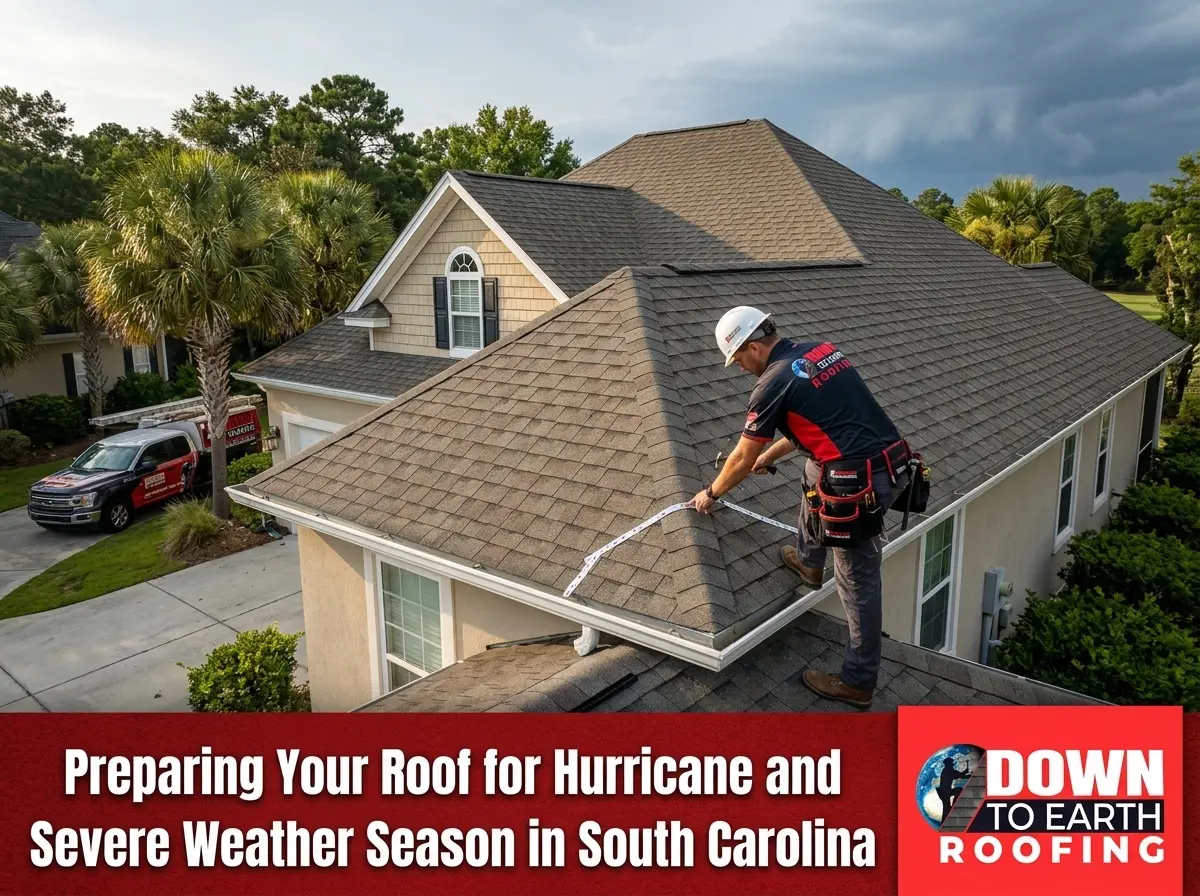
South Carolina’s coast faces hurricanes every year. The season runs from June 1 through November 30. The highest risk is from August through October . Your roof takes the worst of it. High winds, flying debris, and driving rain can cause major damage. Preparation is not optional. It is essential for protecting your home.
Why Is Hurricane Roof Preparation So Important?
Over 90% of hurricane related home damage starts at the roof . Once the roof fails, water gets inside. It damages ceilings, walls, and belongings within minutes. A prepared roof can survive the storm. It also makes insurance claims easier. Proper preparation saves money and stress.
What Are the Key Steps for Hurricane Preparation?
Start preparing at least 30 days before hurricane season. That means scheduling in late April or early May . Here is what you need to do.
Schedule a Professional Roof Inspection
A professional inspection finds problems you cannot see. It costs $100 to $300. This is a small price compared to repairs after a storm . The inspector checks:
- Shingle condition: Missing, cracked, or curled shingles catch wind .
- Flashing integrity: Gaps around chimneys and vents let in wind-driven rain .
- Seal strip adhesion: Shingles that are not sealed can lift and blow off .
- Hurricane straps: These metal connectors anchor the roof to the walls. Without them, the roof can separate from the house .
Check Attic Ventilation and Roof Connections
Go into your attic during daylight. Look for light coming through the roof boards. Any gap will let in rain during a hurricane . Also check for water stains. These are signs of past leaks that may recur under storm conditions.
While in the attic, check the hurricane straps. These are metal clips or straps that connect each rafter to the wall. If any are missing, corroded, or loose, this is a priority repair .
Clear Gutters and Trim Trees
Clogged gutters cause water to back up under the roof edge. This can enter your attic. Clean every gutter and flush every downspout . Make sure water flows away from your foundation.
Trim any tree branches that overhang your roof. During a hurricane, branches become battering rams. Remove any dead trees or limbs near your home .
Document Your Roof for Insurance
Take photos and video of your roof from every angle. Include close-ups of any repairs. Also photograph the attic showing the roof deck and straps. Store these in cloud storage. If your roof is damaged, this pre-storm documentation is your best evidence for an insurance claim .
What Are the Best Roofing Materials for Hurricane Protection?
Not all roofs are equal in a storm. Choosing the right material is key. Here is how the top options compare .
| Material | Wind Rating | Impact Rating | Lifespan | Hurricane Rating |
| Standing Seam Metal | 140-180+ mph | Class 4 | 50-70 years | Excellent |
| Impact-Resistant Shingles | 110-130 mph | Class 3-4 | 25-30 years | Very Good |
| Concrete/Clay Tile | 110-150 mph | High | 50-100 years | Excellent |
| Standard Architectural Shingles | 90-110 mph | Class 2-3 | 20-25 years | Moderate |
| Standard 3-Tab Shingles | 60-70 mph | Class 1 | 15-20 years | Poor |
Standing Seam Metal Roofing
This is the best protection available. The panels lock together with no exposed fasteners. This eliminates the main failure point in high winds. It can withstand Category 4 and 5 conditions . It also offers maximum insurance discounts .
Impact-Resistant Asphalt Shingles
These offer the best balance of protection and value. They are made with polymer-modified asphalt. This gives them flexibility to absorb impacts. Look for Class 4 shingles with 130 mph ratings. Brands like GAF ArmorShield II and Owens Corning Duration FLEX are good choices .
Standard Shingles Are Not Enough
Many coastal homes still have 3-tab shingles. These are the flat, single-layer ones. They typically fail in Category 1 conditions. If your home has these, consider replacing them before the next hurricane season .
How Do Wind Ratings Work?
Wind ratings tell you the maximum wind speed a roof can handle. These ratings come from standardized tests .
Important Terms
- Sustained Winds: The average wind speed over one minute.
- Wind Gusts: Short bursts of higher wind. They can be 20-30% higher than sustained winds .
- ASTM D3161: A test for shingle wind resistance. Class G = 120 mph. Class H = 150 mph .
What Rating Does Your Home Need?
South Carolina building codes require a minimum of 110 mph for coastal areas . But this is the minimum. For real protection, choose materials rated for 130 mph or higher. This accounts for wind gusts that are stronger than the sustained wind speed .
What Is a Hip Roof and Why Is It Better?
A hip roof slopes down on all four sides. It has no vertical gable ends. This aerodynamic shape makes it much more wind-resistant than a gable roof .
Studies show hip roofs are 2 to 3 times more resistant to hurricane damage . Many coastal building codes now require them . If you have a gable roof, it can be reinforced. But a hip roof is the best design for hurricane zones.
What Should You Do 48 Hours Before a Storm?
When a storm is tracking toward you, it is time for emergency prep. Regular inspections are over .
Buy Emergency Supplies Now
Buy heavy-duty tarps before the storm hits. Hardware stores sell out fast. Get a staple gun with stainless steel staples, 2×4 lumber, and nylon rope. These are for after-storm emergency tarping .
Secure Outdoor Items
Bring in or secure all outdoor furniture, planters, grills, and decorations. In hurricane-force winds, these become dangerous projectiles .
Take One Final Video
Within 48 hours of the storm, take a complete video walkthrough of your property. Include both the exterior and interior . This is critical for insurance.
What to Do After a Hurricane
The hours after a storm are stressful. But your actions matter a lot.
Wait for the All-Clear
Do not go outside until authorities confirm the storm has passed. Check Horry County Emergency Management or local news .
Inspect from the Ground
Walk around your home. Look for these signs from the ground :
- Missing or lifted shingles
- Granules in gutters (looks like coarse sand)
- Damaged gutters or downspouts
- Fallen tree limbs on the roof
- Damaged flashing around chimneys or vents
Check Inside for Leaks
Go into your attic and look for water stains or daylight. Check ceilings for brown spots or bubbling paint. If you find active leaks, place buckets to catch water .
Document Everything
Take photos of all visible damage. Include close-ups and wide shots. Also photograph any interior damage. This is for your insurance claim .
Call a Professional for Tarping
Do not climb on your roof. It is dangerous. Call a professional like Down to Earth Roofing LLC. They can provide emergency tarping to prevent further damage .
File Your Insurance Claim
Contact your insurance company within 24 to 72 hours. Most SC policies require prompt notification . Take photos, gather your pre-storm documentation, and be ready to describe the damage.
How Does Down to Earth Roofing LLC Help?
Down to Earth Roofing LLC is a trusted roofing contractor in Columbia, SC. They understand the local weather risks. They can help you prepare your roof for hurricane season.
Professional Inspections
They inspect your roof thoroughly. They check for vulnerabilities. They find problems you might miss. They give you a plan for repairs.
Hurricane-Resistant Materials
They offer materials rated for high winds. They can recommend the right options for your home and budget. They use quality products built to last.
Reliable Repairs and Installation
They fix damage the right way. They also install new, storm-resistant roofs. Their work is durable and meets local building codes.
Insurance Claim Assistance
They can document your damage professionally. They work with adjusters. This makes your claim process easier.
Protect Your Home Before the Next Storm
Hurricane preparation is not complicated. But it must be done before the storm is coming. A professional inspection, the right materials, and proper documentation are your best defenses. Down to Earth Roofing LLC is ready to help you get ready.
Don’t wait until it’s too late. Contact Down to Earth Roofing LLC today. Call them or visit their website at Down to Earth Roofing LLC. Schedule your hurricane preparation inspection and protect your home.
Frequently Asked Questions
What should I do first to prepare my roof for hurricane season?
Schedule a professional roof inspection at least 30 days before June 1. This catches problems like loose shingles, damaged flashing, and missing hurricane straps before the storm season starts .
What is the best roofing material for hurricanes?
Standing seam metal roofing provides the best hurricane protection. It is rated for winds of 140 to 180+ mph. For a more budget-friendly option, Class 4 impact-resistant asphalt shingles rated for 130 mph are a very good choice .
What is a hurricane strap and why is it important?
A hurricane strap is a metal connector that anchors your roof rafters to the walls. It creates a continuous load path from the roof down to the foundation. Without it, the roof can lift off during high winds .
What should I do immediately after a hurricane damages my roof?
Wait for the all-clear from authorities. Then, inspect your roof from the ground. Document all damage with photos. Cover any exposed areas with a tarp if safe. Call a professional roofer for repairs. Contact your insurance company within 24-72 hours .