

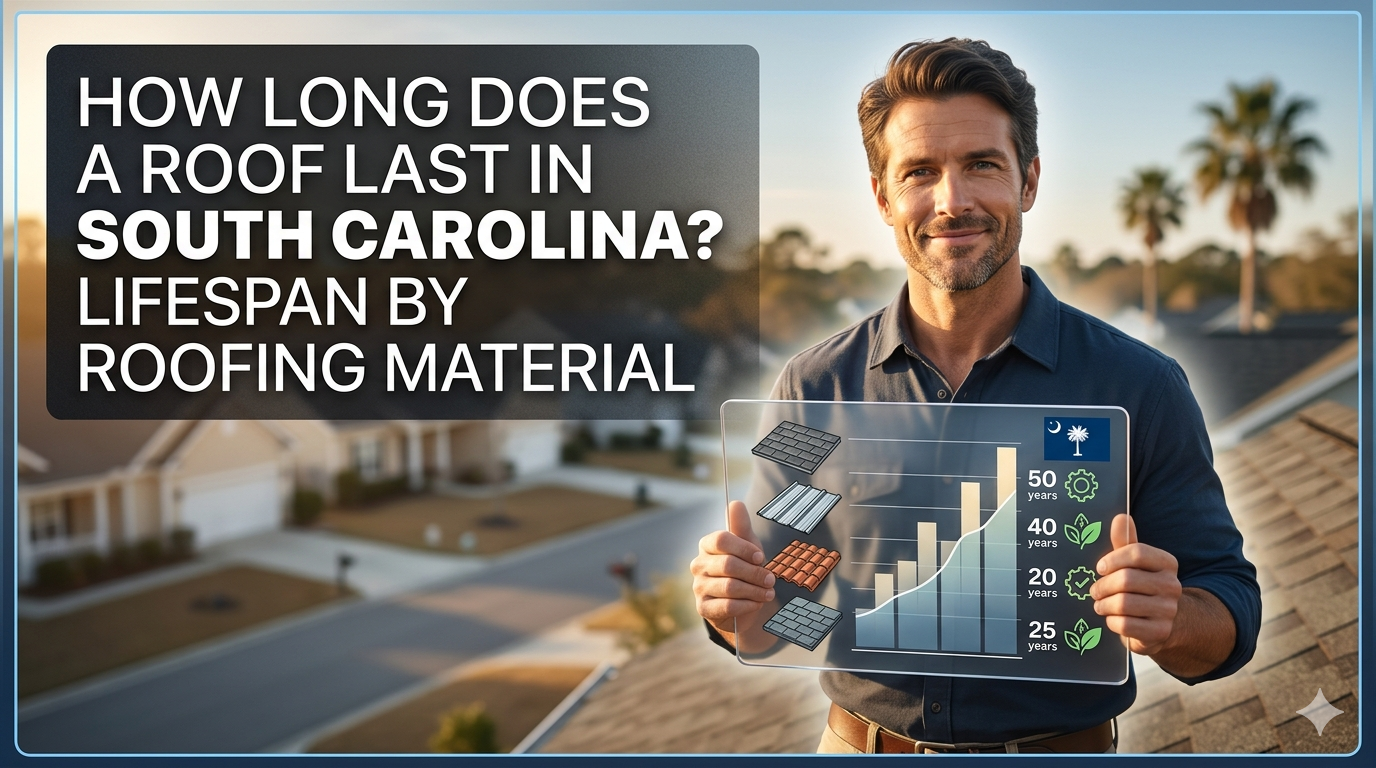
Your roof takes a beating every single day. South Carolina sun beats down hard. Summer storms roll through without warning. Hurricane season brings wind and rain that test every shingle. Nothing lasts forever. Your roof will need replacing eventually. Knowing how long different materials last helps you plan ahead. This guide covers every major roofing option and what you can expect in the Palmetto State.
What Makes South Carolina Weather So Hard on Roofs?
South Carolina has a climate that pushes roofs to their limits. Summer heat often hits 90 degrees or more. UV rays bake shingles day after day. That breaks down the protective oils in asphalt. Shingles become brittle and cracked over time. Then come the storms. Heavy rain tests every seam and flashing point. High winds rip at edges and corners. Coastal areas add salt air to the mix. Salt speeds up corrosion on metal and wears down protective coatings. All these factors combine to shorten roof life. A roof that lasts 25 years in Ohio may only give you 18 to 20 years in South Carolina.
How Long Do Asphalt Shingles Last?
Asphalt shingles are the most common roofing material across America. They are affordable and easy to install. But they also have the shortest lifespan of any major option.
3-Tab Asphalt Shingles
These are the basic flat shingles you see on many older homes. They are thin and lightweight. That makes them budget-friendly but not very durable. In South Carolina, expect 3-tab shingles to last 15 to 20 years. Coastal areas see a shorter life of 12 to 15 years. Salt and wind take a toll quickly. The adhesive strips on 3-tab shingles can fail in high winds too. Granule loss happens faster in the intense southern sun.
Architectural Shingles
Architectural shingles are thicker and heavier than 3-tab. They have a layered, dimensional look that adds curb appeal. They also perform much better in harsh weather. Expect architectural shingles to last 25 to 30 years across most of South Carolina. With proper attic ventilation and regular maintenance, they can reach 30 years. Coastal homeowners should expect 18 to 25 years. The extra weight and better adhesives help them resist wind uplift. They also handle UV exposure better than basic shingles.
Does Metal Roofing Last Longer in SC?
Metal roofing is gaining popularity across the state. It holds up against wind, fire, and salt better than most materials. A quality metal roof can last 40 to 70 years. That is two to three times longer than asphalt.
Standing Seam Metal
This is the premium metal option. Hidden fasteners mean no exposed screws to leak or corrode. The panels lock together and allow for thermal expansion. Standing seam lasts 40 to 70 years in most areas. In coastal South Carolina, expect 35 to 50 years. Aluminum standing seam performs especially well near the ocean. It resists salt corrosion without extra coatings. Steel options need proper protective layers to handle coastal conditions.
Metal Shingles and Tiles
Metal shingles look like traditional asphalt or slate shingles. They offer the same durability as standing seam with a classic look. They last around 40 to 50 years. This makes them a good fit for historic districts or neighborhoods with strict HOA rules. They are lighter than slate or tile but heavier than asphalt. The interlocking design helps them resist wind uplift during storms.
Corrugated Metal
This is the wavy metal you see on barns, sheds, and workshops. It is budget-friendly and lasts 30 to 45 years. Coastal areas reduce that to 25 to 40 years. Keep in mind that corrugated metal has exposed fasteners. Those screws need periodic tightening and replacement. The rubber washers on screws also wear out over time. Regular maintenance extends the life of corrugated metal roofs.
Is Slate Roofing Worth the Investment?
Slate is one of the most durable roofing materials available. It is natural stone that resists weather like nothing else. In South Carolina, slate roofs last 75 to 100 years or more. Some sources say 75 to 150 years nationally. Coastal areas may see 60 to 100 years. The cost is high, often two to three times more than asphalt. Slate is also very heavy. Your home needs strong framing to support the weight. But if you plan to stay in your home long-term, slate is a lifetime investment. It also adds significant resale value. Many historic homes in Charleston feature slate roofs that have lasted generations.
What About Tile Roofing in South Carolina?
Tile roofs handle heat, wind, and moisture very well. Clay and concrete tiles are common in warmer southern states for good reason. They reflect heat and keep homes cooler. They also resist fire and insect damage.
Clay Tile
Clay tile lasts 50 to 100 years in most of the country. South Carolina gives you 40 to 75 years, especially along the coast. Clay is naturally resistant to rot and insects. It also handles high winds when installed correctly. The main drawback is weight and cost. Clay tiles are heavy and require reinforced framing. They are also more expensive than most other options. But they add a distinctive Mediterranean or Spanish look that many homeowners love.
Concrete Tile
Concrete tile is slightly more affordable than clay. It also lasts a long time. Expect 40 to 60 years for concrete tile in South Carolina. It handles heat and wind resistance well. Concrete tiles can be colored and shaped to mimic wood shakes or slate. They are a versatile option for many home styles. They are also less expensive than clay while offering similar durability.
How Long Do Wood Shake Roofs Last in SC?
Wood shakes and shingles give a rustic, natural look. Cedar is the most common type used. But wood needs more maintenance than most materials. Wood is vulnerable to moisture and rot. In South Carolina’s humid climate, wood shake lasts about 20 to 30 years. Coastal areas shorten that to 15 to 25 years. You need regular treatments to protect against moisture, mold, and pests. Fire resistance is also a concern. Some insurance companies charge higher premiums for wood roofs. Many areas restrict wood roofs due to fire codes.
What Is the Lifespan of Flat and Commercial Roofs?
Flat roofs are common on commercial buildings and some modern homes. They use different materials than pitched roofs. The lifespan varies widely based on the material you choose.
TPO Roofing
TPO is a single-ply membrane that reflects sunlight. That reduces cooling costs significantly. It lasts 20 to 25 years with proper installation. TPO is one of the most popular commercial options today. It is affordable and energy-efficient.
PVC Roofing
PVC is a premium flat roof option. It handles grease, chemicals, and ponding water well. That makes it a good fit for restaurants and industrial buildings. PVC lasts 25 to 30 years. It is more expensive than TPO but offers better chemical resistance.
Modified Bitumen
This is an asphalt-based system that has been around for decades. It is affordable and reliable. But it has a shorter lifespan of 10 to 20 years. It also absorbs more heat unless coated with reflective layers. Modified bitumen works well for low-slope roofs.
Built-Up Roofing
Built-up roofing uses layers of asphalt and gravel. It is heavy but durable. Expect 15 to 25 years from a well-maintained BUR system. It handles foot traffic well, which is useful for commercial buildings. It is one of the oldest flat roof systems still in use.
Commercial Metal Roofing
Metal performs well on commercial buildings too. Standing seam metal offers 40 to 70 years. It resists corrosion in coastal areas when using aluminum or coated steel. It costs more up front but pays off over time with lower maintenance costs.
What Factors Shorten Roof Life in South Carolina?
Several factors reduce your roof’s lifespan beyond just materials. Poor attic ventilation traps heat and moisture. That cooks shingles from below and causes premature aging. Missing or damaged flashing allows water to seep in and rot the deck. Trees hanging over the roof drop leaves and debris. That traps moisture and promotes mold growth. Improper installation is another big factor. Even the best materials fail if installed incorrectly. Always hire experienced, licensed contractors. Poor workmanship voids manufacturer warranties too.
How Can You Extend Your Roof’s Life?
Regular maintenance makes a big difference. Clean your gutters twice a year. Remove leaves and branches that collect on the roof. Trim overhanging tree limbs to prevent damage. Schedule a professional inspection every year or two. Catch small problems before they become big repairs. Check your attic for signs of leaks or poor ventilation. Address any issues quickly. Also pay attention to your roof’s age. Once asphalt shingles hit 15 years, start watching closely. Replace worn or damaged shingles promptly to prevent leaks.
When Should You Replace Instead of Repair?
Small repairs are fine for minor damage. But there comes a point when replacement makes more sense. If your roof is approaching the end of its expected lifespan, consider replacing it. If you have multiple leaks in different areas, replacement is often cheaper than ongoing repairs. If shingles are curling, cracking, or losing granules, that is a sign of widespread aging. Your contractor can help you assess whether repair or replacement is the better choice. A new roof adds value to your home and gives you peace of mind.
Frequently Asked Questions
How long does an asphalt shingle roof last in South Carolina?
Standard 3-tab shingles last 15 to 20 years. Architectural shingles last 25 to 30 years. Coastal areas see shorter lifespans due to salt air and high winds. Proper ventilation and maintenance help maximize lifespan.
Is metal roofing worth the higher cost in SC?
Yes. A standing seam metal roof costs more up front but lasts 40 to 70 years. On a cost-per-year basis, metal often matches or beats asphalt shingles. It also handles storms better and lowers insurance costs in some cases.
What is the longest-lasting roof material?
Slate lasts the longest at 75 to 100 years or more. Clay tile also reaches 50 to 100 years in some cases. Both are expensive but offer incredible durability. They can outlast the original homeowner in many cases.
Does coastal South Carolina shorten roof lifespan?
Yes. Salt air, humidity, and hurricane exposure reduce roof life by 25 to 30 percent. A metal roof that lasts 70 years inland may last 50 years on the coast. Choose materials rated for coastal conditions like aluminum or treated steel.
How often should I inspect my roof?
Inspect your roof every year. Also check after major storms. Look for missing shingles, leaks, and sagging areas. Professional inspections catch hidden damage you might miss. Early detection saves money.
What is the best roof material for South Carolina?
Metal and tile perform best in South Carolina’s climate. They handle heat, wind, and moisture well. Slate is excellent but expensive. For budget-conscious homeowners, architectural shingles are a solid choice with good durability.