

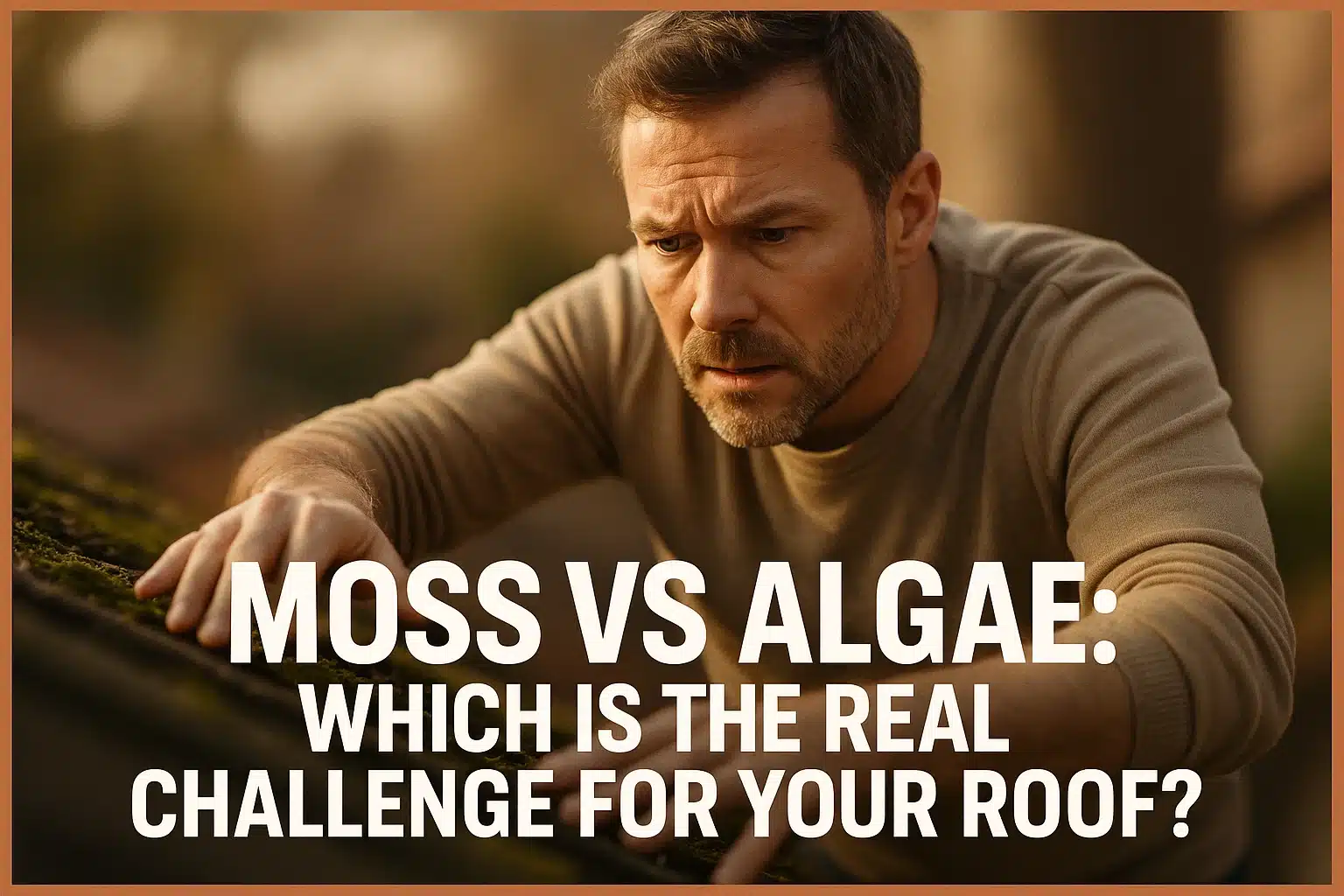
You look up and see green stuff. Or black streaks. Maybe both. Your roof has become a science experiment and you’re not sure if you should panic or just ignore it until it becomes someone else’s problem. I’ve done both, and only one of those approaches ended well. The “ignore it” strategy cost me about $4,000 in repairs that could’ve been avoided with a $200 cleaning two years earlier. Lesson learned the expensive way.
Moss and algae aren’t the same thing, though they get lumped together because they’re both gross things growing where they shouldn’t. They act differently, cause different damage, need different solutions, and pose different levels of threat to your actual roof structure. Understanding which one you’re dealing with—and yeah, you might have both simultaneously—saves you money and prevents the kind of roof damage that requires awkward conversations with your spouse about “why the bedroom ceiling is dripping at 3 AM” and “how much is this going to cost.”
I’ve walked enough Columbia roofs with contractors to know what I’m looking at now. Didn’t used to. Used to think “green equals bad, black equals dirty” and that was the extent of my analysis. Turns out there’s more to it, and that nuance matters for how you respond. If you’re dealing with either problem, regular roof maintenance services can catch these issues before they turn into expensive nightmares.
What Moss Actually Is (And Why It’s Worse)
Moss is a plant. Actual plant with root systems, stems, leaves, the whole botanical deal. It forms those thick, cushiony green clumps that look almost soft and inviting from the ground, like a tiny forest you want to touch. Don’t be fooled. Moss on the roof is like that friend who crashes on your couch “for just a few days” and stays for six months, slowly destroying your furniture, eating all your food, and making everything smell weird.
Moss loves moisture and shade with a passion. North-facing roof sections, areas under tree canopies, valleys where water naturally collects and lingers—these are moss paradise conditions. It holds water like a sponge, keeping your roof surface constantly wet underneath and around it. And because it’s a plant with actual physical root structures, it literally lifts shingles as it grows, creating gaps where water enters and starts the damage cascade.
I’ve pulled up shingles completely separated from decking because moss had worked underneath for years, prying them up millimeter by millimeter. The shingle looked fine from the top, but underneath? Roots, moisture, rotted decking, the whole disaster. When you spot this kind of damage, you need emergency roof repair before the next rain makes it worse.
The damage cascade goes predictably: moss holds moisture against the roof surface → moisture penetrates under shingles → decking absorbs water and begins to rot → rot spreads to rafters and framing → you finally notice a stain inside → you call someone → they find thousands in damage that started with “just some green stuff on the roof I figured was harmless.”
What Algae Actually Is (And Why It’s Sneaky)
Algae isn’t a plant. It’s simpler—single-celled organisms that band together to form those black streaks on roof surfaces you see on seemingly every house in humid climates. The technical name is Gloeocapsa magma, which sounds like a Norwegian death metal band but is actually just blue-green algae that feeds on limestone filler in modern asphalt shingles. Manufacturers add limestone for weight and durability; algae sees it as an all-you-can-eat buffet.
Algae doesn’t lift shingles or create physical gaps. It’s more like a stain that spreads across your roof, making it look dirty and old before its time, reducing curb appeal, and annoying your HOA. The black streaks are actually protective coatings the algae forms to shield itself from UV light—clever little biological survival mechanisms that happen to make your house look abandoned and poorly maintained.
But algae isn’t harmless, just slower. Those streaks indicate your shingles are being slowly consumed from the surface down. Algae feeds on the limestone, and as it eats, it accelerates granule loss—those protective surface particles that shield shingles from UV degradation. More algae, faster granule loss, shorter shingle life, earlier replacement needed. It’s death by a thousand cuts rather than moss’s dramatic structural assault, but the end result is similar: you replace your roof sooner than you should have to. When that happens, you’re looking at full roof repair or replacement, not just a cleaning.
How to Tell What You’re Looking At
From the street, moss and algae look different if you train your eye to see it. Moss growth appears as raised, three-dimensional clumps. Green, sometimes brownish if dying or dormant, textured, obviously sitting on top of your shingles with height and volume. You could theoretically peel it off in sheets if you could reach it safely, like peeling carpet up.
Roof algae looks flat by comparison. Dark streaks running vertically down from peaks toward gutters, following water flow patterns, or blotchy discoloration spreading across shaded sections. No texture, no height, just staining that looks like someone spilled dark paint and it ran. If your roof looks like it has vertical racing stripes or irregular dark patches, that’s algae announcing its presence.
Both love similar conditions: moisture, shade, poor ventilation creating humid microclimates. Columbia’s humidity makes our region moss and algae heaven—I’ve seen five-year-old roofs here look twenty because of unchecked biological growth that would take a decade to develop in drier climates. We get both, often together, sometimes sequentially as conditions favor one then the other.
The north side of your roof probably has both if you have mature trees nearby. South-facing sections might have algae only, since they get enough sun to discourage moss but algae doesn’t care as much about sun exposure.
The Damage Comparison (Why Moss Wins for “Worst”)
If I had to choose between moss and algae on my roof, I’d choose algae every single time without hesitation. Here’s why the comparison isn’t even close.
Moss damage is immediate, active, and structural. Lifted shingles create immediate entry points for water. Constant moisture accelerates decking rot exponentially. Root systems physically separate roofing materials and hold moisture against surfaces. Left long enough, moss causes active leaks that require interior repair, mold remediation, structural carpentry, and sometimes temporary relocation if the damage is extensive enough. I’ve seen moss so established that removing it pulled up half the shingles with it—suddenly a “cleaning” job became a full roof replacement because the moss was literally the only thing holding some sections together.
Algae damage is slower and primarily cosmetic for the first several years. The black streaks hurt curb appeal, reduce resale value, make your house look neglected. Accelerated granule loss shortens shingle life but we’re usually talking 15-20% reduction over decades, not immediate failure. You have time to address algae. You don’t always have time with moss.
That said, algae rarely travels alone in our climate. Where you have algae, you often have moss developing in the same moist, shaded conditions. And algae’s presence indicates your roof environment supports biological growth generally—meaning moss is likely coming if not already established in the dampest sections. Algae is the warning sign; moss is the emergency.
Removal: What Actually Works (And What Destroys Your Roof)
Pressure washing is the absolute worst thing you can do. I know someone—smart guy, engineer, should have known better—who rented a pressure washer, blasted his algae-covered roof, and ended up with clean shingles that were also loose, damaged, stripped of granules, and leaking within six months. The cleaning worked; the roof destruction was the side effect. Don’t be that guy. I’ve seen contractors offer “pressure washing for roofs” and it’s malpractice, pure and simple.
For algae removal, soft washing is the standard that works. Low-pressure application of bleach-based or specialized commercial cleaners kills algae without the mechanical damage of pressure. Let it sit for the recommended dwell time, gentle rinse with garden-hose pressure, done. The black streaks don’t disappear immediately in most cases—they fade over days and weeks as rain washes away the dead algae naturally. Patience required; immediate gratification not available.

For moss removal, you need physical removal plus chemical treatment. Gently scraping loose moss with appropriate tools (working downward, never upward against shingle overlap), then applying moss-killing solution to prevent immediate regrowth. Some stubborn patches need multiple treatments over seasons. Zinc or copper strips installed at the ridge help prevent return long-term—rainwater picks up metal ions as it flows over the strips and creates a hostile environment for moss across your entire roof surface.
Professional roof cleaning services exist for good reasons: this work is dangerous (steep roofs, heights, slippery surfaces), technically finicky (right chemicals, right pressure, right technique), and easy to mess up badly. I’ve cleaned my own single-story garage roof successfully with proper safety gear. I hired pros for my two-story house with complex valleys and steep pitches. Know your limits; hospital bills and roof replacement costs both exceed professional cleaning fees.
Prevention: The Boring Part That Actually Matters
Trees are the enemy here, or at least the enabler. Not completely—shade reduces cooling costs in our brutal Columbia summers—but branches hanging over your roof create the perfect moss and algae environment: shade preventing drying, debris holding moisture against surfaces, organic matter feeding growth, humidity trapped in the canopy. Trim them back. Let sun hit your roof for at least part of the day. Sunlight is free, effective moss prevention that requires no chemicals or maintenance.
Gutter maintenance matters more than most homeowners realize. Clogged gutters overflow during rain, water runs back up under roof edges or down fascia boards, roof edges stay constantly wet, moss and algae thrive in the persistent moisture. Clean gutters, proper drainage, dry roof surfaces—simple equation that prevents complex problems.
Ventilation improvements reduce moisture buildup in attic spaces, which affects roof surface temperature and humidity conditions. Some moss problems trace directly to bathroom vents or dryer vents dumping humid air into attics rather than ducting outside. Fix the ventilation, reduce the ambient moisture, slow the biological growth significantly.
Zinc or copper strips installed at roof peaks provide long-term prevention that works gradually. Rainwater dissolves tiny amounts of metal, which runs down your roof and inhibits biological growth across the surface. Not instant, not dramatic, but effective over years with minimal maintenance. Worth the small investment during new roof installation or as a retrofit during cleaning.
The Bottom Line
Moss is your roof’s active enemy—damaging, destructive, structurally threatening, requiring immediate and decisive attention. Algae is your roof’s slow poison—cosmetically awful, gradually harmful, indicating conditions that support worse problems, but not an emergency in itself. Both indicate your roof environment needs changing: more sun exposure, less moisture retention, better airflow, reduced organic debris.
Columbia’s climate makes this a continuous battle, not a one-time victory. Even after thorough cleaning, spores remain in the environment, conditions persist that favor growth, and regrowth happens over seasons. Regular inspection, prompt treatment of small patches before they spread, and preventive measures separate homeowners who manage roofing costs predictably from those who get financially destroyed by major failures.
When you can’t tell what’s growing up there from the ground, or you’ve clearly got both moss and algae creating a thriving rooftop ecosystem, or you just want someone to tell you honestly what you’re dealing with, Down to Earth Roofing LLC provides Columbia and Lexington homeowners with straightforward assessment and effective solutions. They’ll identify what you’re actually facing, what needs immediate attention versus what can be monitored, and how to prevent return without selling you services you don’t actually need. No panic tactics, no upsell pressure, just straight information from people who’ve cleaned every type of roof growth our humid Midlands climate produces.
FAQs
What is moss on a roof?
Moss is a small green plant that grows in clumps, often in shady, moist places.
Why does moss grow on roofs?
It grows where moisture stays long and sunlight is limited, like shaded valleys or gutters.
How does algae appear on a roof?
On shingles, it will present as dark green, black or brown streaks (or stains).
Is algae harmful to roofs?
Algae primarily causes visible staining on the roof, but it can over time wear down shingles by breaking protective layers.
What is your recommendation on how to get rid of moss and algae?
Mild cleaning agents and warm water, coupled with soft brushing and low-pressure rinsing. For heavy growth, it is recommended that you have the garment professionally cleaned.
How do I stop moss and algae?
Keep the roof free of debris, prune trees for light, apply zinc or copper strips, and ensure good ventilation.