

BOOM! Your house has just been hit by a monster storm, hailballs, 80mph winds, and tree trunks falling. Your roof? It is a battlefield of lost shingles, holes and leaks that are willing to gush in your life.
Heart pounding? You’re not alone. But wait, you, you do not go up there and you do not take duct tape and take and bind. This straight-to-the-point guide gives you the precise playbook (find storm damage under the roof in no time, place it in a temporary solution, call the professionals, and make every penny of the insurance). Before the water gets on your couch, we can make out of chaos some order.
Why Storms Cause Such Serious Roof Damage
Storms do not merely blow down trash cans: They give you a whack that hits your roof first. Being aware of the storm damage to the roof problems will help you know when there is trouble and take quick action. In the USA, extreme weather conditions that are monitored by the National Weather Service cost the USA billions of dollars in property destruction each year with the roofs being the most affected.
Common Types of Storm Damage Roofing
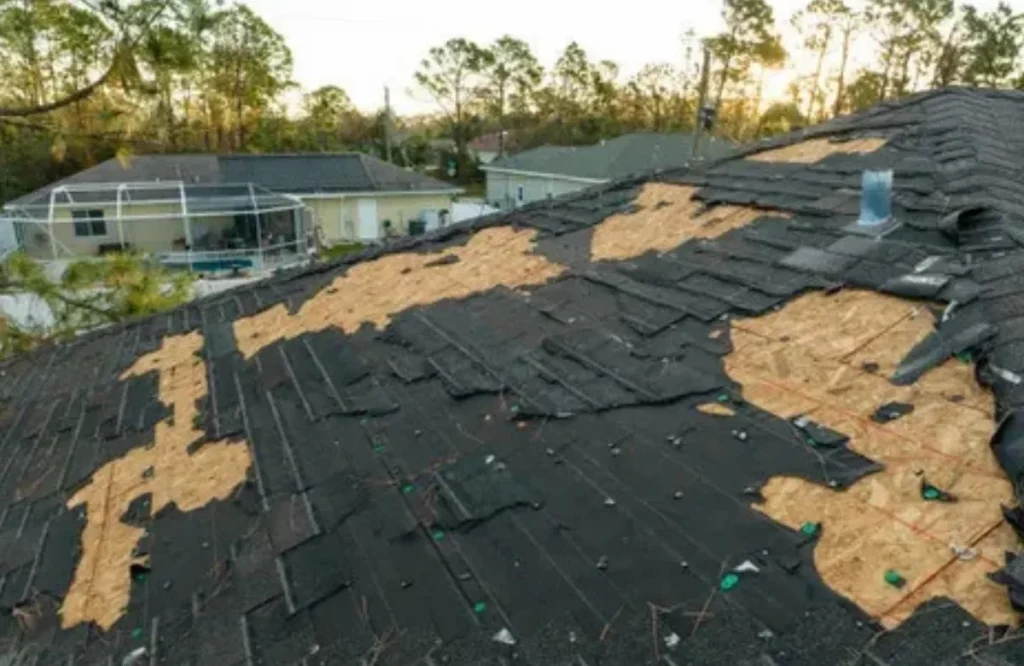
Imagine golf ball-sized hail, high-speed winds greater than 70mph, or tree limbs falling down. The top item on the list is hail damage roof repair, which has the effect of denting shingles and cracking tiles, as well. Roof issues caused by wind damage include lifting of an edge or severe removal of the whole section, and holes are punched by falling debris. Water creep enters and degrades wood internally.
How Storms Affect Different Roof Materials
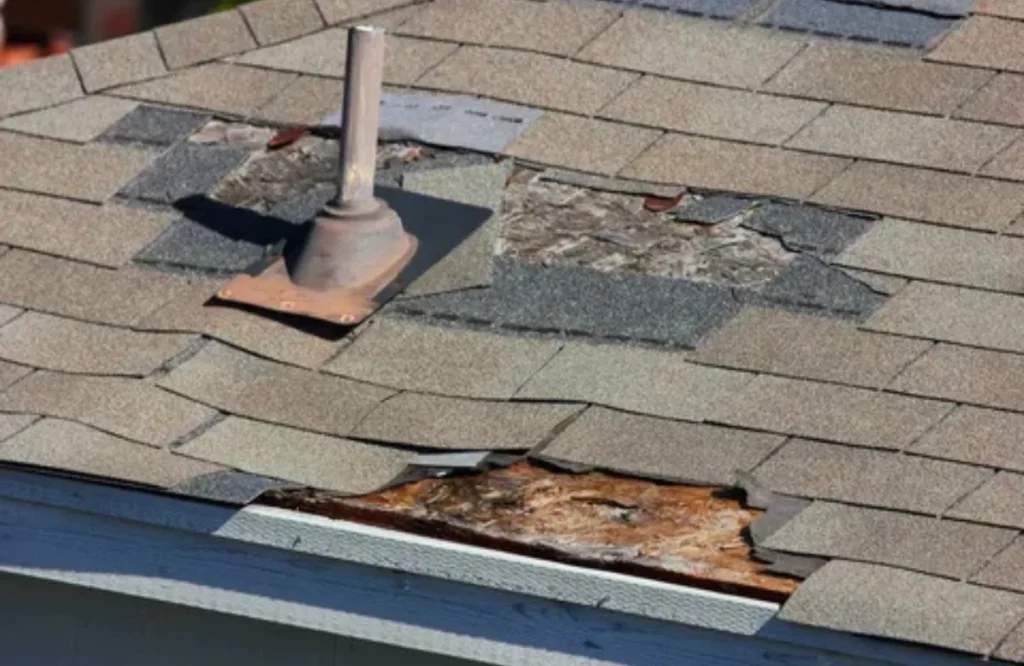
Asphalt shingles which are widely used in suburbs in Florida through California, are very easy to tear in the wind and they are even bruised by hail, resulting in early leakages. Metal roofing is stronger against the problem of wind damage roofs, yet it can be dented by hail. Commercial buildings in cities such as Chicago have flat roofs that accumulate water during storms, causing them to sag. In the Southwest, tile roofs fracture when hit, making minor blows to them a nightmare in storm damage to roofs.
Signs Your Roof Needs Immediate Attention
Look for these red flags: Missing shingles following a windy day, drippings within due to leaks, areas that are hanging that shout of structural issues or watermarks upon ceilings. When you find granules in the gutters, then that is a sign that your asphalt shingles are weeping to need a storm damage roof inspection.
Where Storm Damage Hits Hardest and What It Looks Like
There is no secure spot but some locations are characterized by a greater number of roof damages caused by storm damage. The Coastal regions fight the hurricanes, the Plains states fight the hail and the rest of the country fights the straight line winds. The storm damage to the roofs is quick to manifest, provided you know where to look.
The leaks first appear around the vents or chimneys. Wind curling up, and hail, random bruises, and a bad rash. The roof that has been damaged by a storm may appear perfect on the ground; however, there may be rot inside the roof. This is the reason the professionals will scale the ladder to get the full picture.
This is the core of it, your step-by-step guidebook of managing storm damage roofing from hour one to complete recovery. We will subdivide it into actual examples and you will be prepared regardless of the mess.
Prioritize Safety First
Get out after a storm, when your roof does not look good, that is, when it is hanging loose, it may cave. In cases such as Oklahoma, when a twister hits, the families move out to get out of the way of debris. Look out for the down power lines, wet roofs and electricity is a disaster. Furniture down the stairs should be covered with plastic to protect against leakage and children and pets should be kept indoors.
Tarp Up for Quick Temporary Fixes
Buy heavy-duty tarps at a hardware store- nail or weigh down bare places. I have witnessed people in a hail storm in Denver sealing vents with buckets and using drips. This will purchase time to repair storm damaged roofs without the water destroying your insulation.
Pro-tip: Also, do not walk on a wet roof yourself; you will be calling an ambulance when you fall over instead of a roofer.
Document Every Bit of Damage
Keep records of everything such that your insurance settlement rests on your hat, because it does.
Take shots and videos at any angle: Ground level, if it is safe, on a ladder, and from interior stains. Record dates, weather applications, wind speed and any sounds you may have heard (like the big crack of debris).
List damages: 10 missing shingles south slope, hail dents on fifty percent of the surface. It is easy to file a storm damage roof claim.
Call Pros for a Full Storm Damage Roof Inspection
It is time to summon the professionals and have them scope out the roof damage storm. Do not be a DIY when it comes to the large items like roof repairs after a storm and damage. Insurance-covered and local- finds licensed storm damage roofers. During the after-hail season in Texas, good contractors apply drone technology to carry out safe assessment of leaks or concealed sheathing rot. They inspect faulty trusses that may give way in the future. They should be asked to feel holes and test the loss of granules on shingles.
Repair or Replace? Make the Smart Call
It is a huge decision that comes out of the assessment repair or replace? Minor does minor repairs on the scattered hail damage roof repair, such as replacing bruised shingles. However, in case more than 25% is destroyed, or the roof is more than 15 years old, choose storm damage roof replacement.
Case in point: A family in Colorado Springs had wind damage and roof problems, which were repaired twice, and the repair failed, so they had to replace the roof all the way to avoid insurance fraud. Age, material, damage extent, contractors consider age, material, and extent of damage, get numerous quotes.
Tackle Specialized Storm Damage Fixes
For specialized fixes, hail needs careful shingle matching to avoid a patchwork look. Pros ice their ladders in winter storms and use sealants that flex with temperature swings. Wind damage roof solutions include re-nailing flashing and adding ridge vents for better airflow. Water damage? They cut out rotted plywood, treat for mold (big in humid Southeast homes), and install ice-and-water shields.
Master Your Insurance Claim Process
Navigate insurance like a boss. File your claim ASAP, most policies give 1-2 years, but delays mean denied coverage. Submit photos, your damage list, and contractor estimates. Meet the adjuster on-site; point out every ding politely. If they lowball, hire a public adjuster for 10% of your payout, they fight for fair value on storm damage roof replacement contractor work.
Real-Life Wins and Pro Tips
Real story: My buddy in Florida after Hurricane Ian had a storm-damaged roof with lifted tiles. He documented leaks pouring into his attic, got three bids, and worked the adjuster walkthrough. Payout covered a full metal upgrade, impact-resistant and wind-proof. Maximize benefits by knowing your deductible (often $1k-$5k) and asking about upgrades matching code, like Miami-Dade standards for hurricanes.
Throughout, communicate with your storm damage roofers. Top ones in Atlanta or Seattle guarantee work and handle permits. Watch for red flags like door-to-door hustlers post-storm, check BBB ratings. Timeline? Tarp day one, inspect week one, repairs in 2-4 weeks if materials ship fast.
By following these steps, you turn chaos into control. Skip them, and small roof storm damage becomes moldy walls or collapsed sections. Thousands of US homeowners learn this yearly, don’t join them.
Essential Tips for Hiring Storm Damage Roofers and Filing Claims
- Vet contractors thoroughly: Look for GAF or Owens Corning certifications, workers’ comp insurance, and 5+ years in storm damage roof repair. Read Google reviews from recent storms.
- Get everything in writing: Quotes, timelines, warranties (aim for 10+ years), and payment schedules, no full upfront cash.
- Prep for adjusters: Clean up debris first (keep receipts), highlight dangers, and never sign anything hasty.
- Boost claims success: Bundle with other damages (gutters, siding) and appeal denials with pro photos.
Strategies to Prevent Future Storm Damage
Stay ahead with smart moves.
- Annual inspections: Spring and fall checks catch weak spots before storms hit, clean gutters to avoid water backup.
- Upgrade smart: Switch to Class 4 impact-resistant shingles for hail zones or standing-seam metal for wind. Costs more upfront, pays off in insurance discounts.
- Prep your yard: Trim trees, secure patio furniture, and install storm shutters. Build an emergency kit with tarps, flashlights, and plywood.
Conclusion
Storms will come, but with quick safety steps, solid documentation, pro storm damage roofers, smooth insurance claims, and preventive upgrades, you’ll bounce back stronger. You’ve got this, from tarp to new roof.
Ready to protect your home? Contact licensed storm damage roof replacement contractors at Down to Earth Roofing today for a free storm damage roof inspection.
FAQ’s
Q: How soon should I get a storm damage roof inspection after a storm?
A: Within 24-48 hours to catch hidden issues before water spreads. Delays can void insurance.
Q: What’s the difference between hail damage roof repair and full replacement?
A: Repair for under 25% damage; replace if widespread or roof is aging, pros assess during inspection.
Q: Do all storm damage roofing claims get approved?
A: Most do with good docs, but prove sudden damage (not wear-and-tear) and meet your deductible.
Q: Can I tarp my roof damaged roof myself?
A: Yes, for quick cover, but hire pros for secure installs to avoid more wind damage roof problems.
Q: How much does storm damage roof replacement cost?
A: $8,000-$20,000 average USA-wide, depending on size and materials, insurance often covers most.
Q: How to choose storm damage roofers?
A: Prioritize licensed, insured locals with storm experience, avoid out-of-state door-knockers.