

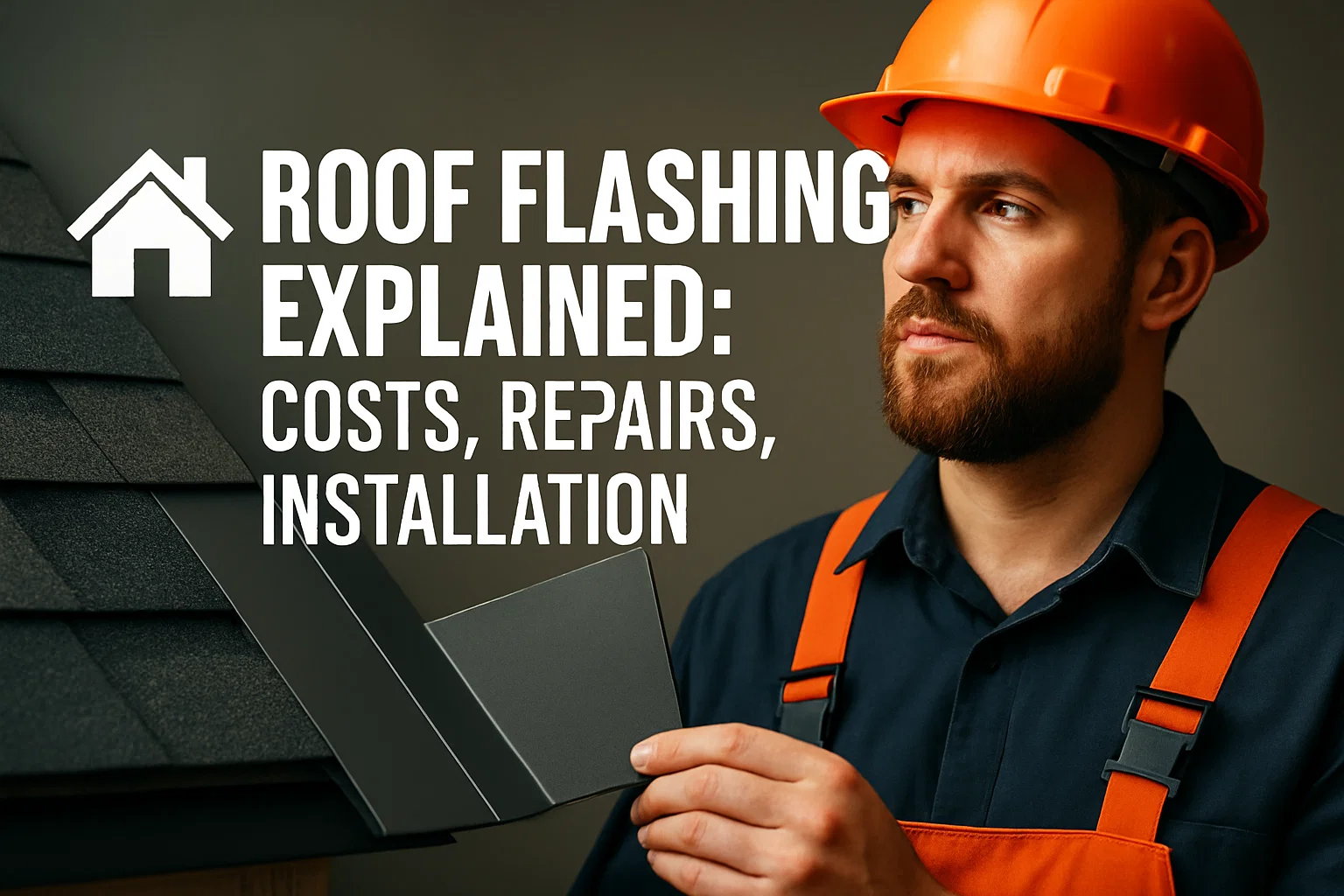
Nobody thinks about flashing until water starts dripping somewhere it shouldn’t. Then suddenly you’re Googling “what is roof flashing” at midnight while placing buckets under your ceiling and cursing whoever built your house. I’ve been there. Most homeowners have no idea what this stuff even is—thin metal pieces, usually aluminum or copper or steel, tucked around chimneys and vents where your roof meets walls. Sounds boring until it’s the reason your living room is flooding and your dog is looking at you like “fix this, human.”
Flashing exists for one reason: water is sneaky. It finds every gap, every joint, every place where different materials meet. Your shingles handle water falling straight down. Flashing handles water trying to sneak sideways—behind walls, around chimneys, into valleys where two roof sections meet. When it works, you never notice it. When it fails, you notice everything, usually at the worst possible time.
I talked to a roofer last year who said flashing failures account for maybe 60% of the leak calls he gets. Not missing shingles, not old roofing, not storm damage—flashing. Little metal pieces people never think about until they’re causing thousand-dollar problems. That stuck with me. Now I actually look at my flashing occasionally, like a responsible adult who learned from other people’s expensive mistakes.
What Flashing Actually Does (And Why It Fails)
Think of your roof like a system of highways. Shingles are the main roads—designed for heavy traffic, water flowing straight down, handling volume. Flashing is the exit ramps, overpasses, and intersections—places where water changes direction or where the road meets something else entirely. These junctions need extra protection because physics is annoying: water flows downhill, but wind, gravity weirdness, and simple capillary action can pull it uphill or sideways into gaps you didn’t know existed.
Common failure points? Chimneys, where masonry meets roofing materials that expand and contract at completely different rates. Masonry barely moves; shingles and decking shift with temperature constantly. Something has to give, and it’s usually the seal between them. Skylights, where a hole in your roof creates obvious vulnerability that manufacturers try to solve with fancy kits that still degrade over time. Valleys, where two roof planes dump water into a single channel that can get overwhelmed during heavy rain. Wall intersections, where roof meets vertical siding and water can slip behind if not properly diverted.
Columbia’s climate makes flashing particularly cranky. Our humidity causes metal corrosion faster than dry climates—I’ve seen aluminum flashing pit and fail in ten years that would last twenty in Arizona. Temperature swings—hot days, cool nights, occasional ice events—make materials expand and contract, breaking seals over time through simple thermal fatigue. And our storms? Wind-driven rain finds gaps that gentle showers miss entirely. A flashing system that handles normal rain might fail catastrophically during a microburst with horizontal rain.
The worst part: flashing often fails slowly, invisibly, until suddenly it’s not invisible at all. Small gaps let small amounts of water that evaporate before you notice. But they keep letting water in, day after day, rotting decking, saturating insulation, creating mold colonies. By the time you see a stain on your ceiling, the damage behind it is extensive.
Types of Flashing You’ll Actually Encounter
Not all flashing looks the same because not all roof junctions work the same. Understanding what you’re looking at helps you communicate with contractors and spot obvious problems yourself.
Step flashing handles roof-to-wall intersections. Picture stair steps of metal woven between shingles and running up the wall. Each piece overlaps the next like shingles do, creating a water barrier that can move slightly with the building. When installed right, you can’t see most of it—hidden by siding and shingles, doing its job silently. When installed wrong, water runs behind it and destroys your wall framing.
Valley flashing lives in the channels where two roof sections meet. These areas handle massive water volume—two slopes draining into one space, sometimes with debris accumulation. Valley flashing needs to be wide, durable, and properly secured because when it fails, you’re looking at major interior damage across multiple rooms. I’ve seen valley failures that ruined entire ceilings.
Chimney flashing is its own beast because masonry and roofing materials fundamentally hate each other. They expand, contract, and settle at different rates. Good chimney flashing uses multiple pieces—base flashing attached to the roof, counter-flashing embedded in mortar joints, creating a flexible seal that accommodates movement. Bad chimney flashing is single-piece, rigid, and guaranteed to leak within a few years.
Vent pipe flashing seals those pipes sticking through your roof—plumbing vents, exhaust fans, whatever. Usually rubber boots that slide over pipes and seal against the roof. These degrade fastest because rubber hates UV exposure; I’ve seen them crack and fail in five years. Cheap ones fail faster.
Drip edge runs along roof edges, directing water into gutters rather than letting it wick back under shingles or run down fascia boards. Simple, cheap, and often skipped by bad installers trying to save $50 in materials. Big mistake that causes expensive rot.
Why Flashing Fails (It’s Not Always Age)
Sure, time destroys everything eventually. But flashing often fails prematurely from specific, preventable causes that have nothing to do with how old it is.
Installation errors top every roofer’s list. Pieces too short to properly overlap, improperly sequenced so water flows behind instead of over, nailed in wrong places creating new penetration points, inadequate or wrong-type sealants. I’ve seen “professional” flashing jobs where the contractor clearly didn’t understand basic water flow patterns. Predictable leaks followed, and the homeowner paid twice—once for bad work, again for proper repair.
Movement and settling break seals even when materials are fine. Houses shift—foundations settle, framing expands and contracts with seasons, soil moisture changes affect everything. Flashing needs flexibility designed in to accommodate this. Rigid installations crack, separate, or pull away from surfaces. Good flashing moves slightly; bad flashing fights movement and loses.
Storm damage happens even to well-installed flashing. Wind lifts edges, hail dents metal creating new low spots where water pools, flying debris impacts. After major weather events, flashing inspection should be automatic, not “wait and see if we get leaks.”
Corrosion eats metal from the inside out. Galvanized steel eventually rusts no matter what; it’s just chemistry. Aluminum holds up better but still degrades, especially in salty or polluted air. Copper lasts essentially forever but costs accordingly and develops that green patina some people hate. In Columbia’s humidity, cheaper metals fail faster than their ratings suggest.
Sealant deterioration creates gaps that water exploits. The caulk or roofing cement used to seal flashing edges dries, cracks, shrinks, and falls out over time. UV exposure accelerates this. Regular maintenance catches this before water finds the opening, but most homeowners never look until there’s a problem.
Repair vs. Replace: Making the Call
Not every flashing problem requires full replacement. Sometimes resealing, patching, or securing loose sections solves the issue for years. But knowing when to stop repairing and start replacing matters for your budget and long-term protection.
Repair works when: damage is localized to small sections, metal is still structurally sound without significant corrosion, fasteners are secure but seals failed, or you’re addressing recent storm damage that hasn’t caused secondary issues. Cost typically runs $300 to $800 for minor repairs—resealing, patching, securing loose sections, replacing single damaged pieces.
Replacement becomes necessary when: metal is corroded through or thinning, multiple sections show failure suggesting systemic issues, original installation was fundamentally wrong from the start, or surrounding roofing materials also need attention making piecemeal repair pointless. Partial flashing replacement runs $1,000 to $1,500 typically. Complex areas like chimneys or skylights with difficult access? $700 to $3,000+ depending on size, accessibility, and whether surrounding damage requires additional work.
The hidden cost multiplier that destroys budgets: water damage to underlying structure. If flashing failed long enough to rot decking, rafters, or interior finishes, you’re not just paying for metal work. You’re paying for carpentry, insulation replacement, drywall repair, possibly mold remediation, maybe electrical work if water reached fixtures. That “$500 flashing repair” becomes “$5,000 comprehensive restoration” faster than you can say “I should have called someone sooner.”
The DIY Question (And Why It’s Risky)
Can you patch flashing yourself? Sometimes. Small sealant jobs using quality roofing cement, securing a loose section with proper fasteners, replacing a vent pipe boot if you’re comfortable on ladders and have basic hand tools. I’ve done minor stuff myself when the fix was obvious and the roof was low enough that falling wouldn’t kill me.
But flashing installation requires understanding water flow patterns, proper overlap sequencing, integration with surrounding roofing materials, and knowing where fasteners can and cannot go. Get the overlap direction wrong and you’ve created a water funnel instead of a barrier. Miss the integration with shingles above and below, and water runs behind your repair into places you can’t see. Use the wrong sealant and it fails in six months.
Steep roofs, multi-story heights, complex chimney work, anything involving structural assessment? Call professional roof repair services. The cost of proper work beats hospital bills, interior damage from failed DIY, or the special shame of having to call a pro to fix your failed fix anyway.
What Quality Flashing Work Looks Like
Good flashing shares characteristics regardless of type, location, or material.
Proper material selection for the application and climate. Copper lasts forever but may be overkill for some situations; it’s also expensive and requires specialized installation. Galvanized steel is cheaper but needs earlier replacement in humid environments like ours. Aluminum offers middle-ground durability and cost. Match the material to your situation and budget realistically.
Correct overlap so water flows over, not under, joints. Each piece should direct water onto the piece below, like shingles, creating continuous drainage paths. Backwards overlap is surprisingly common in amateur work and causes immediate leaks.
Secure fastening without creating new penetration points. Nails or screws placed where they won’t be exposed to water flow, properly sealed, holding firmly without crushing or distorting the metal.
Flexible seals accommodating normal building movement. Rigid caulk cracks; quality polyurethane or butyl rubber sealants maintain flexibility through temperature swings. Application matters too—too thin fails, too thick doesn’t cure properly.
Integration with surrounding materials so the flashing system works with shingles, siding, masonry—not against them. Flashing should be part of a cohesive water management system, not an afterthought slapped on top.
Maintenance: The Boring Part That Saves Thousands
Flashing doesn’t need constant attention, but it needs some. Annual inspection—part of overall roof maintenance services catches sealant failures, corrosion starts, loose sections before they become active leaks.
After major storms, visual inspection from ground or ladder identifies obvious damage. Binoculars help assess chimney and valley flashing without climbing. Look for lifted edges, missing pieces, obvious gaps, or new stains on exterior walls that suggest water getting behind.
Gutter maintenance indirectly protects flashing. Clogged gutters overflow, water runs where it shouldn’t, flashing gets overwhelmed by volume it wasn’t designed to handle. Clean gutters, happy flashing, dry interior.
Address minor issues immediately. That small rust spot, that cracked sealant, that slightly lifted edge, that missing nail? Fixable now for little money. Ignored, they become entry points for water that destroys everything behind them and costs exponentially more to repair.
I keep a tube of roofing cement and some basic tools specifically for this. Twice a year I walk my property with binoculars, looking at flashing around chimneys and vents. Takes twenty minutes. Caught two minor issues before they became leaks. Worth it.
The Bottom Line
Flashing is your roof’s unsung hero—ignored completely when working perfectly, blamed entirely when failing. Understanding what it does, why it fails, and what repairs actually cost helps you make informed decisions rather than panic-driven expensive ones.
Columbia’s climate demands respect. Our humidity, storms, and temperature swings accelerate flashing deterioration compared to milder regions. Budget for regular inspection and prompt repair. The alternative—water damage, mold, structural repair, interior restoration—costs exponentially more and disrupts your life significantly.
Material and labor costs vary: basic repairs $300-$800, significant replacement $1,000-$3,000+, complex chimney or skylight work potentially higher depending on access and surrounding conditions. But these numbers pale beside interior restoration costs when flashing failure goes undetected for months or years.
When you need flashing assessment or repair from people who understand Midlands weather patterns, proper installation techniques, and honest evaluation of repair vs. replacement, Down to Earth Roofing LLC provides Columbia and Lexington homeowners with straight talk and quality workmanship. They’ll tell you when simple resealing suffices and when replacement is truly necessary—no upsell, no scare tactics, just solutions that actually last.
FAQs
What is roof flashing?
Roof flashing is a material, such as copper or other metal, used around roof joints to prevent water from leaking into the house.
How long does roof flashing material last?
Flashing will typically last from 20 years or more depending on the material and weather exposure.
Can I repair flashing myself?
In the short term, if not too much damage occurs, small repairs are a possibility, but professional work is safe and dependable.
How frequently should the flashing be checked?
At least twice a year, including after storms.
What causes flashing damage?
Foresue, bad installation, precipitation and roof movement.
How much does flashing repair cost?
Pricing ranges from $300 to more than $1,000 for damage and type of flashing.