

Roof problems can happen anytime, often when you least expect them. A sudden leak, storm damage, or broken shingles can quickly turn into a big headache if not handled properly. Knowing how to conduct quick emergency roof repairs can save your home, your belongings, and even your wallet.
Still, the fact that you are not a professional roofer does not mean that you will not know what to do in the case of an emergency repair to avoid additional damage before the arrival of the helpers. Some of the simple, practical solutions, safety tips and how to deal with the roofing emergencies will be discussed in this guide.
Why Quick Emergency Roof Repairs Are Crucial
Emergencies never wait and neither should you. A timely response to roof damage can:
- Prevent water damage: Leaks might destroy ceilings, walls, and electrical systems.
- Avoid structural collapse: This is caused by the heavy water that may affect the integrity of your roof.
- Save money: It is usually less expensive to maintain a machine in good condition today, than to repair extensive damage in the future.
When a problem is overlooked, it may become a large calamity. Both safety and cost-efficiency require the use of quick action.
Where Emergency Roof Repairs Are Most Needed
Certain situations demand immediate attention:
- Storm damage: Heavy winds, hail and falling debris may pierce or beat holes in the roof.
- Sudden leaks: Leaks can be seen when it rains heavily and it is time to seal it.
- Metal roof damage: Dents, holes, and loose flashing on metal roofs must be fixed immediately.
- Flat roofs with pooling water: Water mass can cause structural stress and this can result in increased collapse.
To prioritize properly and avoid any further damage, it is essential to identify the spheres that require urgent attention.
Essential Steps for Emergency Roof Repair
Emergency roof repairs should have a balance of safety, speed and efficiency. Here’s a step-by-step guide:
1. Ensure Safety First
Before any repair:
- Wear protective shoes and protective clothing.
- Do not work on the roof when it is raining heavily, windy, or lightning.
- Wait until professionals are called in case the damage is serious or the roof is weak.
The priority is and always will be safety.
2. Stop a Roof Leak During a Storm
The water damage may be reduced immediately:
- Pour dripping water into buckets or containers.
- Move the valuables out of the way of the leak.
- Apply rooftop waterproof heavy tarp over the area of leakage. Nail it, rope it, or use sandbags to make sure that the wind does not blow it.
This is a temporary solution that can be sustained until a permanent solution is attainable.
3. Install a Tarp Properly
To secure the covering, this is the emergency roof tarp installation guide:
- Beginning at the very top of the roof and going down.
- The tarp should be stretched at least 3-4 feet beyond the damaged area.
- Pin sandbags or roofing nails.
- Test holes that might allow entry of water.
A well-laid tarp may eliminate further leaks during the rainy seasons.
4. Temporary Patch Repairs
Minor vandalism can be fixed on the spot:
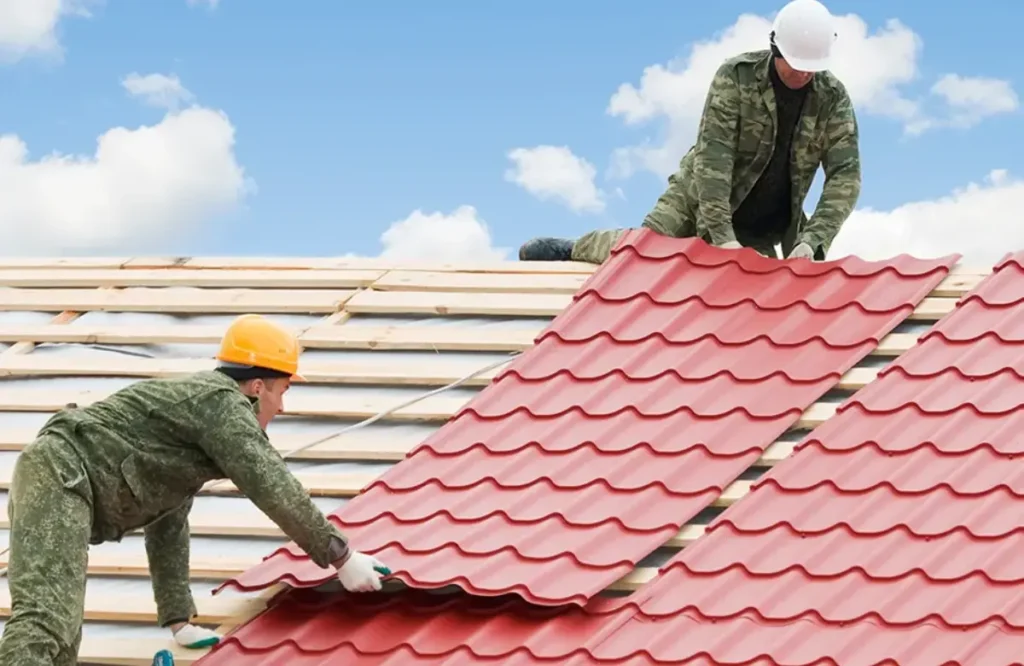
- Adhesive is applied to emergency flashing repair to close small holes or loose flashing of metals.
- Use commercial-grade emergency roof sealant on cracked or broken shingles.
- In the case of metal roofs, seal holes using metal patches that are fixed using waterproofing sealant.
Such temporary solutions are not lasting but can only delay the additional harm before professional repairs are undertaken.
5. DIY Temporary Roof Repair Methods
For homeowners comfortable with hands-on fixes:
- Plastic sheeting or heavy-duty tarp: Covers damaged areas quickly.
- Roofing tape: Seals small cracks temporarily.
- Plywood patches: Provide extra support for soft spots caused by water pooling.
Always remember these are temporary solutions meant to bridge the gap until a professional repair is done.
6. Avoiding Structural Collapse from Water Weight
Standing water on a flat roof is dangerous:
- Take out water using a pump where possible.
- Obvious outlets to avoid congestion.
- Weight distribution in the case of walking on the roof.
The buildup of the heavy water may lead to the collapse or sagging of the roof, which needs to be addressed immediately.
7. Document the Damage
- Make insurance photos.
- Mark the problem areas of contractors.
Effective documentation guarantees a faster insurance payment and enhanced repair schedules.
8. Call a Professional
Even when you may have been carrying out temporary repairs, it is important to have a professional check-up scheduled. They can:
- Identify hidden damage.
- Make sure of structural integrity.
- It is safe to perform permanent repairs.
A professional will provide security to your home or business on a long-term basis.
Tips for Effective Emergency Roof Repairs
- Keep repair materials handy: Tarp, sealant, nails, and tape stored for emergencies.
- Act fast during leaks: Immediate response limits damage.
- Prioritize safety: Avoid risky maneuvers; use ladders and harnesses if necessary.
- Regular inspections: Identifying weak spots beforehand reduces emergencies.
- Know your roof type: Repairs vary for shingle, flat, or metal roofs.
Benefits of Quick Emergency Roof Repairs
- Minimized property damage and water intrusion.
- Reduced repair costs compared to delayed action.
- Improved safety for family or employees.
- Peace of mind knowing the situation is under control.
Prompt action is always better than waiting until small problems become expensive disasters.
Conclusion
Emergencies do occur, but emergency roof repairs know how to do quick repairs and that is what it all comes down to. Whether it is DIY temporary roof repair options or emergency roof tarp installation instructions, quick action will save your property and minimize damage in the long run.
Remember to stay safe, act quickly, and call professionals for permanent fixes. To explore more tips and expert roofing solutions, visit Down to Earth Roofing.
FAQs
How can I stop a roof leak during a storm?
Wipe dripping water and secure valuables by using a heavy-duty waterproof tarp or containers.
What is the easiest DIY temporary roof repair method?
Cover up all the damage with a plastic sheet, roofing tape or a heavy tarp.
Can I repair a metal roof leak myself?
Yes, you can make small leaks temporary fixes with emergency roof sealant or patches; however, it is advisable to conduct a professional inspection.
How do I avoid structural collapse from water weight?
When walking on a flat roof, remove standing water and spread your weight when walking.
What is an emergency roof tarp installation guide?
It is an incremental process of safely covering the damage in the roof using a tarp before the damage can be repaired permanently.