

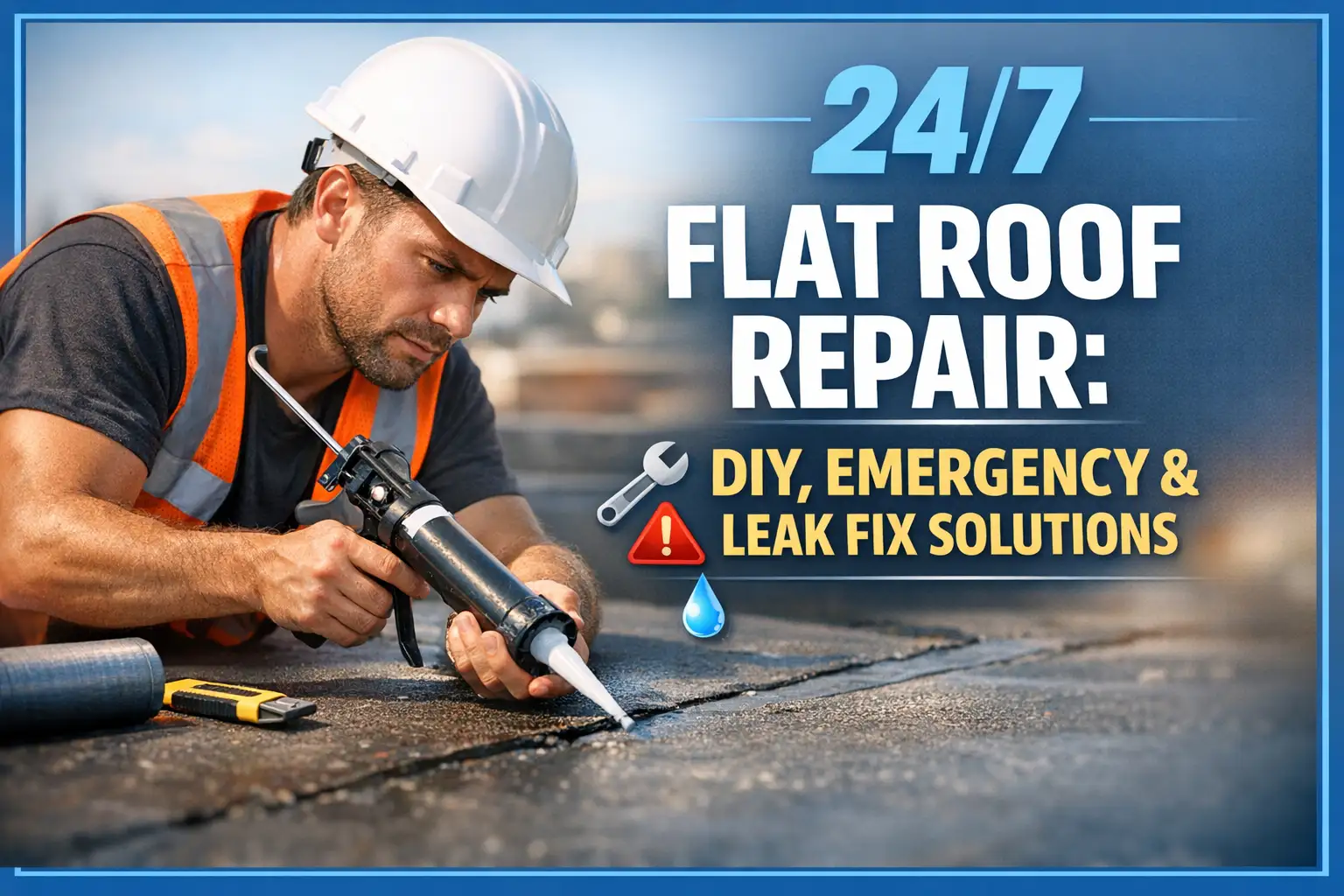
Flat roofs in the case of garages, additions, and commercial buildings, are wonderful except when they leak, and in an hour, it can become a nightmare, day or night. The good news is that you can cope with the simple 24/7 roof repair, prevent the leakage in the case of an emergency, as well as develop a smart strategy of replacing the flat roof with a step-by-step plan.
This is a step-by-step manual on how to fix a flat roof immediately, simple DIY options, when to call a pro, and how to keep your roof dry regardless of the weather, the U.S. climatic conditions. We shall also discuss how to fix a flat garage roof and what to do in case of flat roof repair during wet seasons, when all you need is to fix the drip immediately.
Why 24/7 Flat Roof Repair Matters
In the U.S., the flat roofs are exposed to heavy rainfall, snow, hailstones, and intense sunpower and thus leakages normally occur at their most inconvenient moment, such as during storms and rain over the weekend. An emergency repair of a flat roof with fast and a flat roof can save the costly water damage to drywall, wiring, and flooring, and all that is stored.
- Water is most likely to enter at the most vulnerable spot, which would be seams, vents, and flashing, and can flow miles away without you noticing the stain on your ceiling.
- Even a minor time lag in the repair of a leaked flat roof will cause the mold to develop, ceiling beams to be left hanging, and damage to insulation.
- Claims made under an insurance policy tend to presuppose that you made reasonable emergency measures (tarping, patching up) to prevent additional destruction.
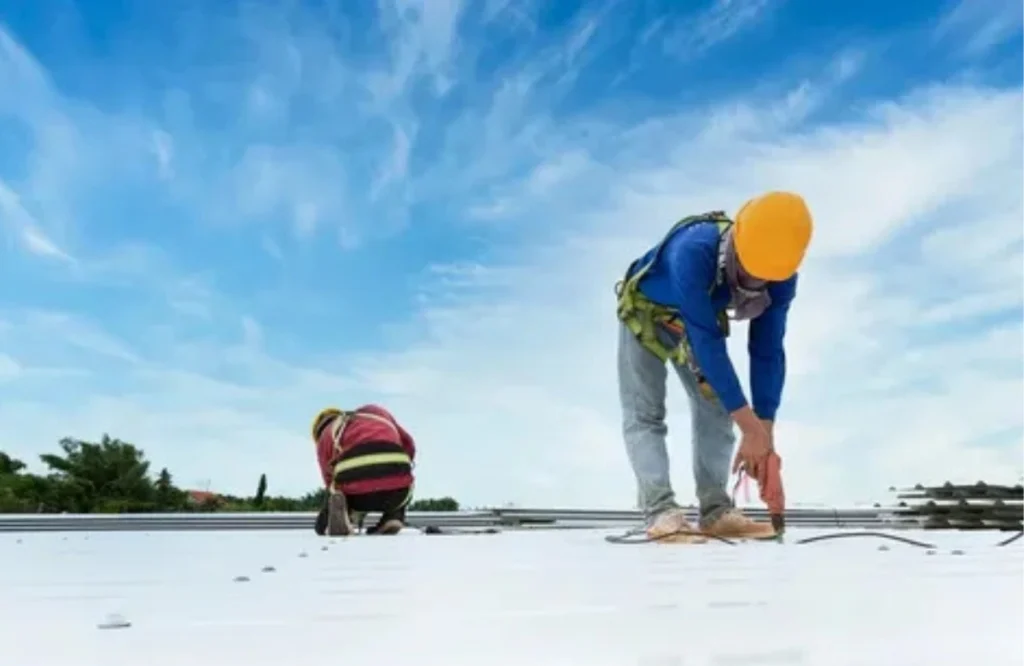
Having a few simple guidelines on how to repair a roof 24/7, you will be able to stabilize the situation and call a contractor to fix the issue permanently.
What Causes Flat Roof Leaks and Damage?
When one knows what damages the roof, it would be a lot easier to repair a flat roof and to plan the reconstruction of a flat roof.
Common issues include:
- After the rain, standing water (ponding) that gradually erodes the membrane.
- The roofing material has cracks, blisters, or open seams.
- Vagrant or broken flashing of vents, AC lines, skylights, and edges.
- Branch puncture, tool puncture, and foot tract puncture.
- Outdated roofing that is now dry, cracked, or shrunken.
On flat garage roofs, the common areas of leakage are at the junction of the roof and the wall, pipe leaks, or at patch jobs that are rotting out. Understanding these weak points helps you spot problems faster. This makes it easier to respond quickly when a leak appears. It is especially helpful during urgent situations that need reliable flat roof installation and repair solutions.
24/7 Flat Roof Repair In Depth (DIY, Emergency & Leak Fix)
In this section, you are taken through the steps of repairing a flat roof, including emergency leak control, and a more serious DIY plan of flat roof replacement.
Step 1: Stay Safe First
When performing any emergency repair of the flat roof, safety should be first.
- Always avoid going out on the roof during lightning, high winds, or in case it is icy.
- You should never walk on a wet, slick membrane unless the surface is low and safe to walk on, or that of a one-story garage.
- Also, use a heavy ladder, non-slip shoes, and better still, have someone with you.
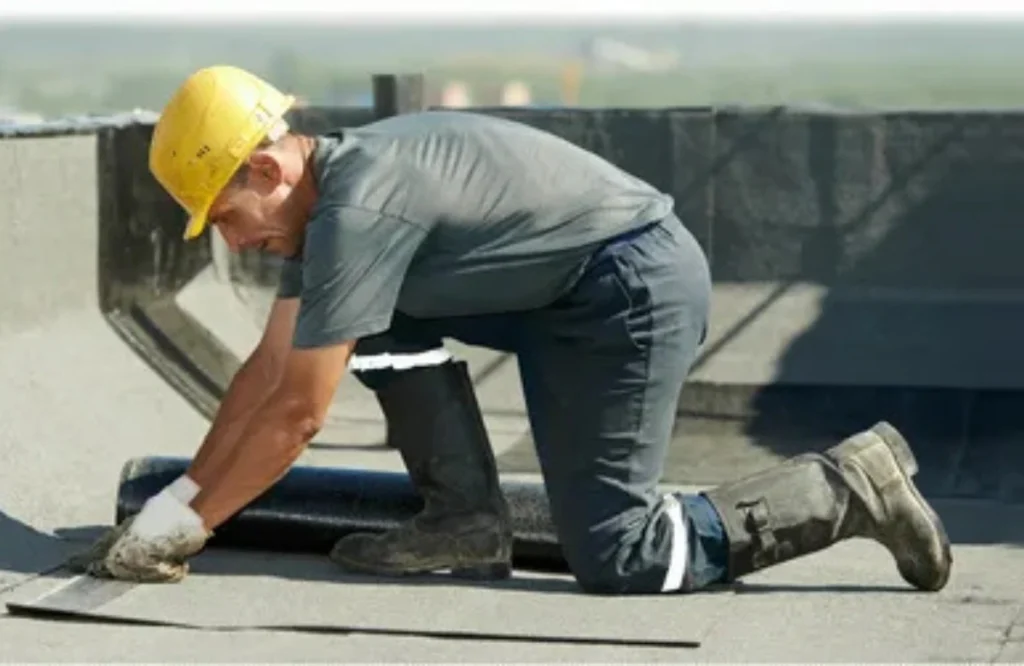
In case it is not safe, remain at home and concentrate on containing the leak at the ground until the weather changes.
Step 2: Control the Leak Inside
Before you even touch the roof, protect the inside of your home or garage.
- Shuffle furniture, boxes, and other valuables out of the drip.
- A bucket or a large tub should be placed under the leak in order to collect the water.
- Hammer a small opening in a bubble of the sagging ceiling to allow the water to drain in a controlled manner into a container, rather than bursting on its own.
This will purchase time and minimize the damage, as you plan on flat roof repair during wet weather or with a roofer.
Step 3: Find the Source on the Roof
In case the conditions are safe and the roof is accessible, you may seek the source of the leak.
Look for:
- Apparent holes, tears, or punctures.
- Open seams or blisters in the roof material.
- Purchasing or piercing pipes, vents, pitch pans, or skylights.
- Regions where the water is ponding or where the surface appears to be soft.
Leaks usually occur around plumbing vents, electrical penetrations, and AC lines (pitch pans). The leak may also occur at the very edge of the roof, which is where the roof and siding meet.
Step 4: Temporary Flat Roof Emergency Repair (Any Time, 24/7)
When you require quick 24/7 roof repairs, it is to prevent the water from entering your home at this moment, and think of long-term solutions later.
Tarp Method
A heavy‑duty tarp is one of the most effective emergency tools for fixing a leak on a flat roof.
- Have a tarp that is large enough to accommodate the damaged area and stretches several feet on each side of the damage.
- Put the tarp erect and flatten the tarp to ensure that it is not destroyed by water.
- Use 2x4s, bricks, or sandbags to secure the edges. It is best not to drive new screws through the membrane.
This approach works well for flat roofs during wet seasons. It helps keep water at bay. A proper repair can be done later using materials trusted by professionals. These are ideal for flat roof repairing work.
Tape or Wet‑Patch Sealant
Smaller holes or seams are fixable with roofing tape or wet-patch flashing cement in order to make a fast fix.
- Wash the area to the best of the weather (clean up the dirt and loose material).
- Over a crack or seam, apply roofing tape pressing firmly in place to seal.
- In wet products that have the label wet-patch put on them, it is possible to apply the cement even on the damp surface, and the moisture leaks slowly as the conditions dry.
These are only temporary solutions; you will have to get a proper repair during dry weather.
Step 5: Permanent DIY Flat Roof Repair (Dry Weather)
When the weather is clear and after the roof is dry, you can come up with a more complex, long-range solution. Here is where the how do you repair a flat roof is a more comprehensive process.
Typical steps include:
Clean the roof surface
- Get rid of rubbish, dust, and loosening gravel.
- Wipe around the damaged area in order to have adhesives and coatings stick.
Cut out damaged material
- Trim away loose or blistered membrane.
- Make sure the edges are firm and well‑bonded.
Patch with compatible materials
- Apply a patch kit or any similar membrane (EPDM, modified bitumen, etc.).
- Use roofing cement or adhesive, as directed, and press the patch down.
- Patches are strengthened by the use of cloth or a network by many pros.
Seal seams and edges.
- Sealant at seams, vents, and the edge of patches with brush or trowel.
Apply coating on the area (not necessary, but useful)
- Other DIYers apply liquid roofing or elastomeric paints to larger regions to provide additional waterproofing as well as reflectivity.
When you are unsure of the materials or when your roof is generally damaged and extensive, then you might be ready to give thought to full flat roof replacement.
Step 6: DIY Flat Roof Replacement vs Hiring a Pro
Simple homeowners can replace their flat roofs; however, it is a massive task. Replacement can involve a complete replacement, which can include:
- Removal of the old roofing material and inspection of the deck underneath, whether it is rotten or soft.
- Laying new underlayment with proper overlay and fastening.
- The new membrane (single-ply, modified bitumen, or a coated system) to be added must have the appropriate seams and flushing.
- Checking of vents, flashing, and gutters, and repairing them when necessary.
To most individuals, it is safer and longer lasting to use a licensed roofing contractor to carry out the task of replacing the flat roof, especially on large homes or commercial buildings in the U.S. It is still possible to perform minor DIY flat roof replacement work on a flat garage roof or shed where the stakes and heights are less.
Step 7: Special Case – How to Repair a Flat Garage Roof
The leaking of a garage roof usually happens on a flat roof, and the stored goods, tools, or vehicles, and therefore early intervention is important.
- Follow the same emergency procedures: Cover the location, collect drips, and relocate the objects that are in danger.
- Be particularly attentive to the relations between the house and the garage, the edge of the perimeter, at which water may penetrate.
- In the case of older garages, a full replacement of the entire roof in flat form might be less expensive and more intelligent compared with repairing the same areas of weakness each year.
When a small repair on a flat roof is required, a good place to train is your garage roof, as it can be easily accessed before you initiate more complicated work.
Key Tips for Flat Roof Emergency Repair
When a leak appears at 2 a.m., you need simple, clear steps.
- Safety first, are you ever going to compromise your life to prevent a leak?
- Contain water in the house using buckets and plastic covers on furniture.
- Tarp and sandbag are your main tools for emergency repair of the flat roof in bad weather.
- You should have basic supplies, i.e., heavy-duty tarp, roof tape, wet-patch cement, gloves, and a flashlight.
- Once the storm ends, take pictures of the damage to the documents in order to have insurance, and book an appointment with a professional inspector.
These measures will allow you to deal with flat roof repairs during wet weather admirably enough to prevent much harm as you consider the permanent remedy.
Benefits of Professional Flat Roof Replacement
Even if you like DIY projects, there are clear benefits to hiring a pro when flat roof replacement time comes.
- Proper installation of underlayment, overlaps, and seams to give long-term waterproofing.
- Painter finishing vents, chimneys, and edges (usually a location of leaks).
- The ability to access materials of better quality and warranties not available with DIY.
- Within a shorter period, your home is not exposed to the weather.
Professional flat roof replacement has been commonly the best long-term value for U.S. homeowners with their large homes, rentals, and commercial properties.
Conclusion
Flat roof problems can be stressful, but with basic 24/7 roof repair skills, you can protect your home or garage, handle emergency leaks, and make smart choices about repair versus replacement. By combining quick temporary fixes, solid DIY work where it makes sense, and professional help for big jobs, you can keep your flat roof strong, safe, and leak‑free in every U.S. season. To explore more, visit Down to Earth Roofing.
FAQs
How do you repair a flat roof in an emergency?
Control the leak inside with buckets, then safely place a tarp over the suspected area, securing it with boards or sandbags, and follow up with temporary tape or wet‑patch if conditions allow.
Can I do a DIY flat roof replacement myself?
Yes, on small, low roofs like garages or sheds, skilled DIYers can strip old material, install new underlayment, and apply a new membrane, but larger homes usually benefit from a professional.
How do I repair a flat garage roof leak?
Locate the leakage in the vicinity of seams, edges, or at the junction of the garage and the house. A tarp or patch can be used as a temporary solution, and then arrange a permanent solution or replacement later when the roof is dry.
Is flat roof repair in wet weather possible?
Emergency measures such as tarping and the application of some wet-patch products can be undertaken, but serious, lasting jobs are to be performed when weather conditions are mild and dry.
When is flat roof replacement better than repair?
When there are numerous leaks in your roof, quite a number of cracks, or when it is old and is approaching the time when replacement should be done, it is normally more economical to do a replacement than to find a new leak after every season.
What materials are best for fixing a leak on a flat roof?
Common options include roofing tape, compatible patch membranes, roofing cement, mesh reinforcement, and liquid coatings designed for your specific roof type.